成语——黔驴技穷

Meaning of the Idiom

qian lu ji qiong

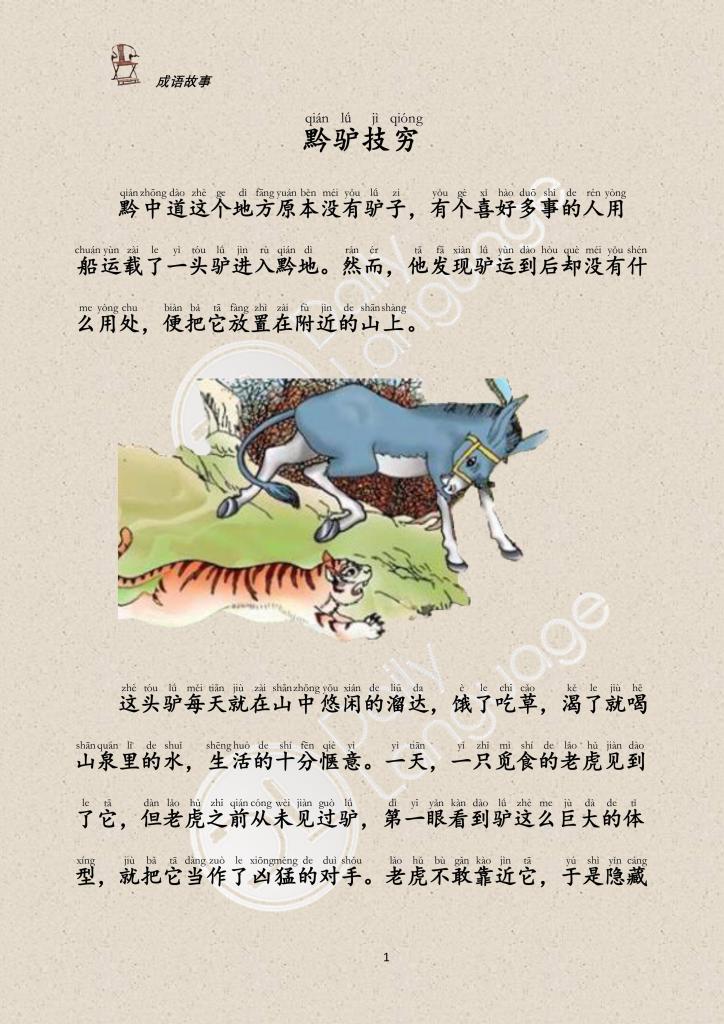
In ancient times there were no donkeys in Guizhou province. Somebody brought a donkey from somewhere and tied it to a tree at the foot of a mountain.

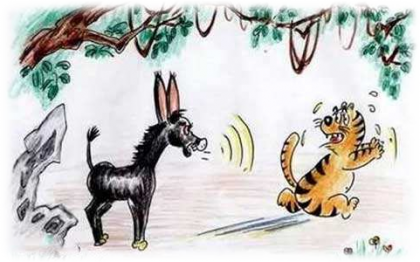
A tiger saw the donkey, and thought that it must be a fearsome monster. It hide behind a tree and spied on the donkey.

When the donkey brayed, the tiger was frightened, thinking that the donkey was about to devour it.

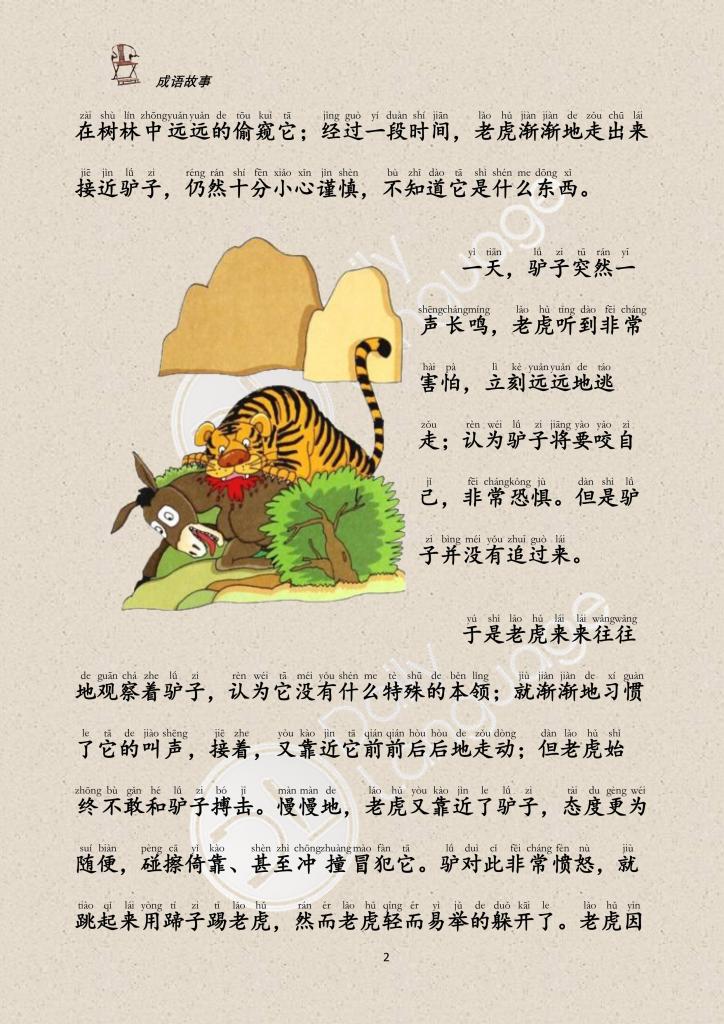
After a while, seeing that the donkey had not moved, the tiger approached it and teased it. The donkey became angry, and kicked the tiger.

The tiger thought to itself: “Its then all it is capable of?” It then jumped on the donkey and ate it.

This idiom is used to mean that one has exhausted one’s skills.

黔驴技穷

qián lǘ jì qióng。 黔:今贵州一带。穷:尽。现用“黔驴技穷”借指仅有的一点本领也用完了。

出自唐·柳宗元的《三戒·黔之驴》。

例句

如果这些办法都无法解决问题,那我可就黔驴技穷了。

现在看来,这个可恶的家伙已经是黔驴技穷了,我们对他不得不防着点。

若不是他已到了黔驴技穷的地步,怎么可能无奈的放弃呢!

Reading The Paragraphs!

Meaning of Words


 词语华文解释英文解释
喜好指兴趣;爱好。
例句:林先生喜好下棋,每周都会找朋友下几局。
be fond of
溜达也作“蹓跶”。意思是闲逛、漫步。
例句:他在河边来回溜达,希望找几块漂亮的石头。
stroll; saunter; go for a walk
惬(qiè)意形容心情感到愉快、舒畅,或满意、舒服。
例句:最近人们都喜欢乘坐邮轮,因为可以轻松惬意的旅行。
comfortable
觅(mì)食意思是寻找食物,泛指动物到处搜寻食物吃,是动物生存行为中的一种基本方式。
例句:长期进化的结果,使每种动物的觅食方式都有各自特点。
look for food
偷窥是指暗中观察,偷看。
例句:这个人鬼鬼祟祟,经常趴在墙角偷窥邻居家的一举一动。
peek
谨慎(jǐn shèn)指对外界事物或自己言行密切注意,以免发生不利或不幸的事情。
例句:志明新考取了驾照,父亲嘱咐他开车上路时一定要小心谨慎
carefully; prudent; discreet; cautious
长鸣意思是用乐器或发声器官发出较长时间的鸣叫。
例句:每年全民防卫日的警笛长鸣,是为了提醒我们时刻牢记国家安全。
long tweet
搏(bó)击可以指搏斗,也指惩处打击或陷害等。
例句:两只雄狮为了争夺领地,在河岸上展开了激烈的搏击
fight
轻而易举形容事情容易做,不费力,省事。
例句:事情并不象阿福想的那样轻而易举
be an easy job to
欣喜若狂意思是形容高兴、兴奋到了极点。
例句:这一颗彗星的发现,使几位天文工作者欣喜若狂
ecstatic; overjoyed
盘算指筹划谋算;形容对事情的经过或结果进行仔细而从容的反复思考、考虑。
例句:见今年的苗圃接了很多瓜果,老人家不由得盘算明年再多种些蔬菜。
figuring
心满意足用来形容做了某事或得到什么事物等,自己心情很愉悦高兴,让自己觉得满意。
例句:妈妈常对我说:“只要你能快乐地长大,我就心满意足了。”
contented; satisfied

成语——按图索骥

Meaning of the Idiom

an tu suo ji

Looking for a Steed with the Aid Of Its Picture

During the Spring and Autumn Period (chūn qiū ,770-476 BC), there was a man in the State of Qin whose name was Sun Yang (sūn yáng ). Sun Yang was very expert in looking at horses and judging their worth. People called him Bo Le (Bo Le was fabled to be in charge of heavenly steeds as a celestial), and he was often asked to appraise and select horses.

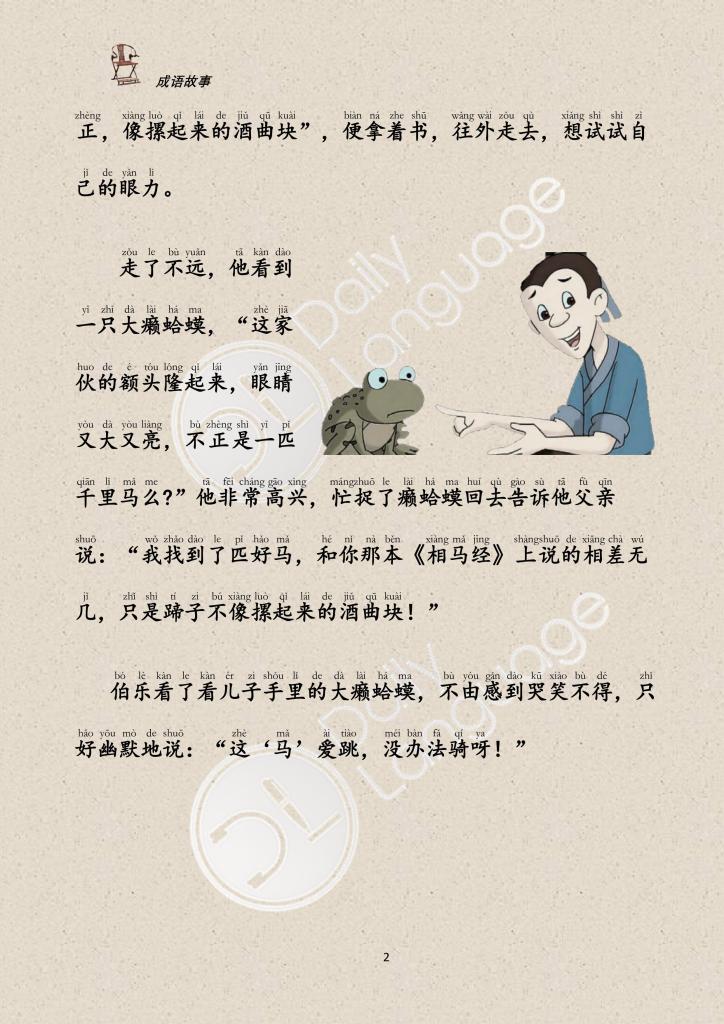
Bo Le wrote a book entitled The Art of Looking at Horses and Judging Their Worth, based on his experiences and knowledge accumulated over the years. The book was also illustrated with the pictures of various horses. Bo Le had a son who thought it was very easy to appraise horses according to the book. So he took it with him to look for fine horses. He found the characteristics of a toad fit very well the characteristics described in the book. So he happily took the toad back home, Bo Le did not know whether he should laugh or cry. “That is just what we call looking for a steed with the aid of its picture.”

Later, people have used the set phrase “look for a steed with the aid of its picture” to refer to handling affairs mechanically in the outmoded ways without being flexible. Sometimes it is also used to refer to trying to locate something by following up a clue.

按图索骥

àn tú suǒ jì,按图索骥是由寓言故事演化而来,指按照图像寻找好马,比喻按线索寻找,也比喻办事机械、死板。 

出自《汉书·梅福传》、《艺林·伐山》。

例句

警察根据已经发现的线索,按图索骥,很快找到了那批被盗文物。

有些读者,不明白文字后面的深层寓义,常常按图索骥,已近于理解错误。

做好一件事必须要亲身实践,纸上谈兵和按图索骥的做法都应当反对。

Reading The Paragraphs!

Meaning of Words


 词语华文解释英文解释
相( xiāng)传指长期以来互相传说。
例句:七夕节是个历代相传的节日。
legend
相(xiàng)马指通过外观和状态来观察和识别马的好坏。
例句:古时候,马是重要的交通工具,因此相马成为一种非常重要和特别的工作。
to judge horses
辨别对不同的事物在认识上加以区别。
例句:他辨别声音的能力很强。
identify
孰(shú)优孰劣意思是谁好谁坏。
例句:这几所学校的广告都做得精彩异常,但孰优孰劣还是要看学生的表现才知道。
relative merits
尊称意思是尊敬的称呼。
例句:医护人员都穿着雪白的大褂,被人们尊称为“白衣天使”。
address somebody respectfully; honorific title
形态特征形态:形式或状态。指事物存在的样貌,或在一定条件下的表现形式。特征:是一个事物与其他事物不同的特点。
例句:玫瑰和月季的花朵在形态特征上都十分相似。
form; shape; pattern
character
资质指人的天资、禀赋。或指从事某种工作或活动所具备的条件、资格、能力等。
例句:小班教学的优点,是让老师可依据学生的资质能力来因材施教,给学生更多的成长空间。
natural endowments; intelligence
酒曲指一种包含各种活性菌种用来酿酒的混合物。
例句:这些米酒是用酒曲酿造的,非常香甜.
distillers yeast
相差无几意思是彼此没有多大差别。
例句:中美两国的国土面积相差无几,但是中国人口数量是美国的好几倍。
not much difference between
哭笑不得用来形容遇到可恨又可笑的事情時很尴尬的神情和心态。
例句:小安把香叶当成茶叶来泡,真是令妈妈哭笑不得
be able neither to cry nor to laugh; be at a loss whether to cry or to laugh; 
幽默形容有趣或可笑而意味深长。
例句:小刚这个人幽默风趣,大家都喜欢和他聊天。
humor; humour
拘泥教条(jū nì jiào tiáo)形容做事时只按照固有的框架,不知道变通。
例句:朱先生是个拘泥教条的老人,他总是对年轻人的穿着嗤之以鼻。
inflexible; starchiness
墨守成规指思想保守,守着老规矩不肯改变。
例句:纵然大家都改用电脑来辅助设计,他仍然墨守成规,用老方法来画设计图。
legalistic

成语——滥竽充数

Meaning of the Idiom

lan yu chong shu

Be there just to make up the number

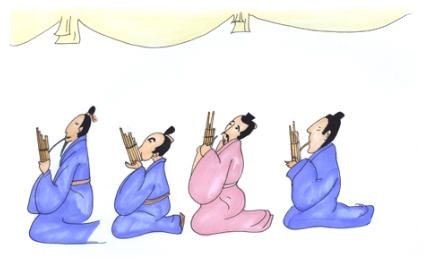
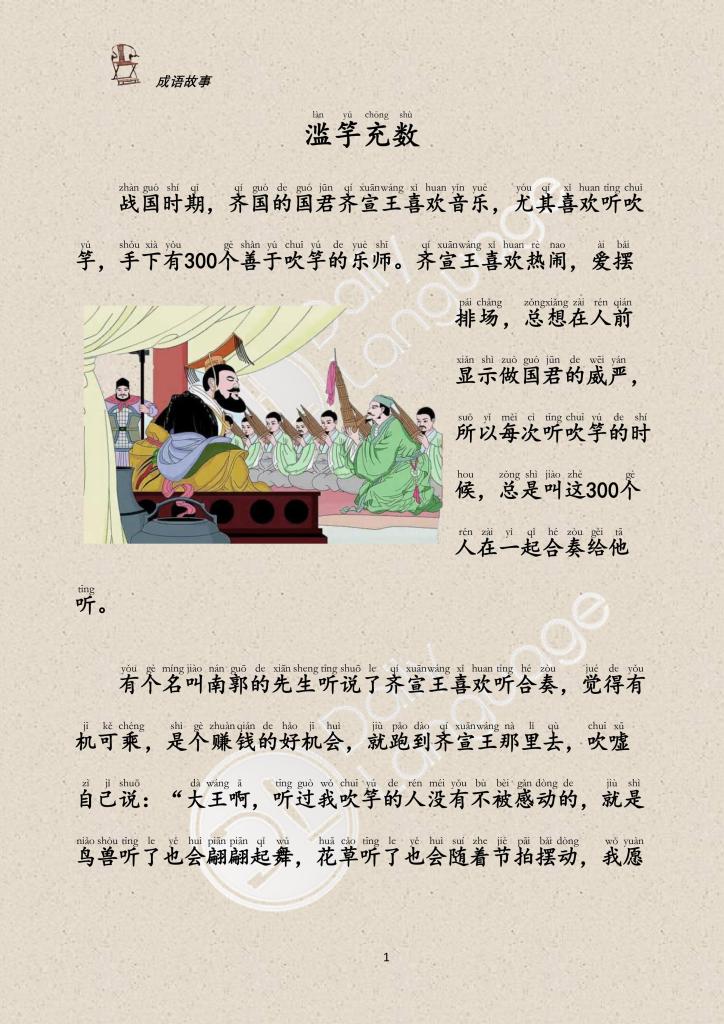
During the Warring States Period (475-221BC), the King of the State of Qi was very fond of listening to Yu ensembles. He often got together 300 Yu players to form a grand music. The king treated his musician very well.

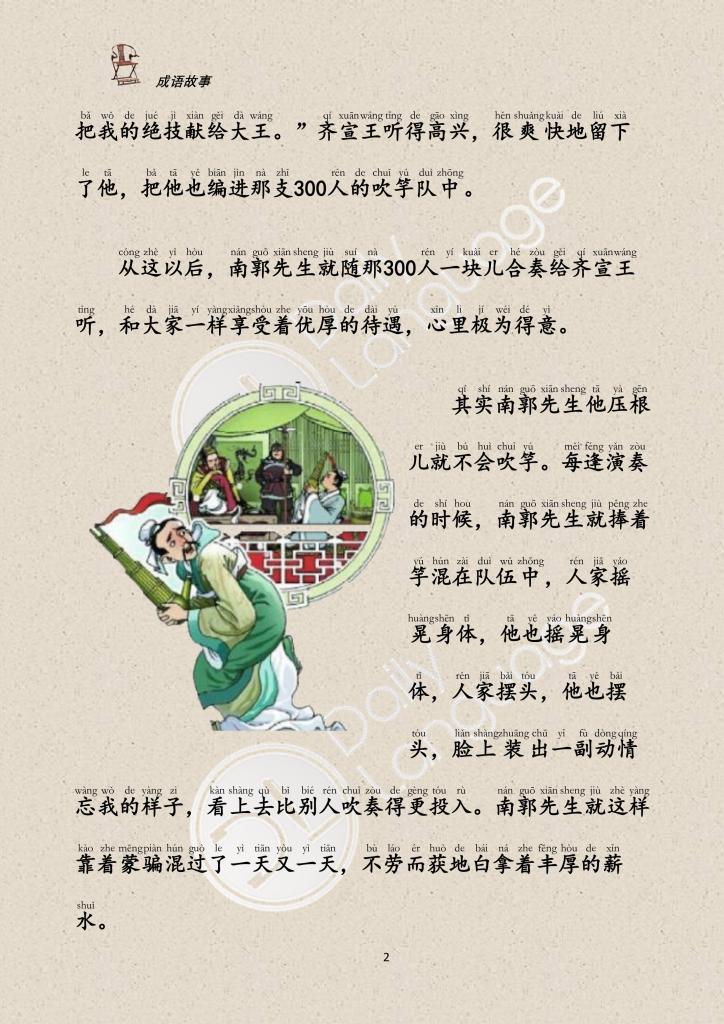
A man named Nanguo heard about that and he managed to become a member of the band, even though he was not good at playing the instrument at all. Whenever the band played for the king, Nanguo just stood in the line and pretended to play. Nobody realized he was making no sound at all. As a result, he enjoyed his treatment just as the other musician did.

When the king died, his son became the new king who also liked the music played on the Yu. However, he preferred solos so that he ordered the musicians to play the Yu one by one. Therefore, Nanguo had to run out of the palace.

The idiom “Be there just to make up the number” is used to mock someone who passes for a specialist. You can also hear people saying it about themselves to show their modesty.

滥竽充数

làn yú chōng shù,意思是不会吹竽的人混在会吹竽的队伍里充数。比喻无本领的冒充有本领,或次货冒充好货。 

出自先秦《韩非子·内储说上》。

例句

傍晚爷爷在路边买了两斤橘子,回家却发现被骗了,里面有好多坏的。这个小贩真是滥竽充数

学习不能滥竽充数,也不能不懂装懂,认识到这点才能进步。

每当媒体夸火箭队没有姚明不行时,他总说谦虚的说自己是滥竽充数

Reading The Paragraphs!

Meaning of Words


 词语华文解释英文解释
善于指的是在某方面具有特长。
例句:他这个人非常善于和孩子们打交道。
be good at; have genius for
排场意思指场面铺张,举行活动的规模大而过度。
例句:今年女王生日庆典参加人数少了很多,没有以前那么大的排场了。
ostentation and extravagance
有机可乘意思是有机会可以利用,有空子可钻。
例句:我们要时刻保持警惕,不要让坏人有机可乘
there is an opportunity to take advantage of
吹嘘意为夸张地宣扬或编造优点、长处;或为对人和事过份吹捧。
例句:小刚总爱在大家面前吹嘘自己。
brag; crack up; oversell
翩翩(piān piān)起舞形容轻快地跳起舞来。
例句:在美妙舒缓的音乐声中,一只白天鹅开始翩翩起舞
dance 
绝技指人所具有的独一无二或者超出常人的技艺。
例句:经过十年苦练,小雨终于掌握了这项织花的绝技
unique skill; consummate skill
爽(shuǎng)快意思是舒适畅快,或形容做事或性格干脆直率。
例句:微风里摇曳的荷花,悠悠飘来的一股清香令人心神爽快
frank; refreshed; comfortable
待遇意思是物质上的报酬或政治上所给予的权利、地位;或指对待人的情形、态度、方式。
例句:你们职员的待遇多好,比我们公务员强多了!
pay; wages; salary
压根儿口头词语,可解释为根本;从来。
例句:他是个老单身,压根儿就没有过恋爱。
thoroughly; radically
动情忘我形容(人)的一种忘我的热忱心态。由于真心真情的投入,而忘记了自我的存在。
例句:孩子们合唱的如此动情忘我,舞台下的观众们完全被打动了。
inebriate
投入指置身其中;或将感情或东西放进去;可用来形容全身心地做一件事情。
例句:自从了解到毕业考试的重要性,我更加认真地投入到了学习当中。
to put in; to throw in; to plunge into; to join
蒙骗指骗人者通过模糊、扰乱受骗者等手段以达到自己骗人的目的。
例句:这个骗子专门蒙骗老人,警察终于将他绳之以法。
blindfold, cheat, deceive
不劳而获意思是自己不劳动而占有别人的劳动成果。
例句:世界上唯一可以不劳而获的就是贫穷,唯一可以不付出就不断增长的就是年龄。
reap where one has not sown
好景不长意思是美好的光景不能永远存在。
例句:他曾有过美满幸福的家庭,但是好景不长,随着妻子的病逝,经济的拮据,使他的生活陷入痛苦的深渊。
all good things must come to an end
惶惶(
huáng huáng)不可终日
惶惶,亦作“皇皇”,指急躁、慌乱、心神不定的样子。词语指心慌意乱,神不守舍,一天也过不下去了。
例句:自从伏地魔获得重生以来,背叛过他的食死徒担惊受怕,惶惶不可终日
to be on tenterhooks; to be in a constant state of anxiety
不学无术意思是指没有学问因而没有办法,现指没有学问,没有本领。
例句:这个暴发户不学无术,他的发财完全是靠投机。
ignorant and incompetent
露出马脚比喻暴露了隐蔽的事实真相或内情无意中泄露出来。
例句:他绝不会轻易地露出马脚,承认自己是一名伪善者。
 give oneself away
自欺欺人意思是欺骗自己,也欺骗别人。现指“就是明明知道真相,却骗自己也骗别人,一般指不肯面对事实。
例句:她那满不在乎的样子实际是在自欺欺人
deceive oneself and [as well as] others
逃之夭夭(yāo yāo)本意是形容桃花茂盛艳丽。后借用“逃之夭夭”表示逃跑。
例句:那辆宝马车撞倒了这个指示牌,竟然不做任何事就逃之夭夭了。
ran away

成语——买椟还珠

Meaning of the Idiom

mai du huan zhu

Get the casket and return the pearl

Meaning of judge a book by its cover, choose the wrong thing。

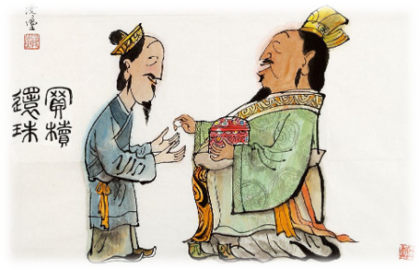
A man from the state of Chu wanted to sell a precious pearl in the state of Zheng. 

He made a casket for the pearl out of the wood from a magnolia tree, which he fumigated with spices. He studded the casket with pearls and jade, ornamented it with red gems and decorated it with kingfisher feathers.

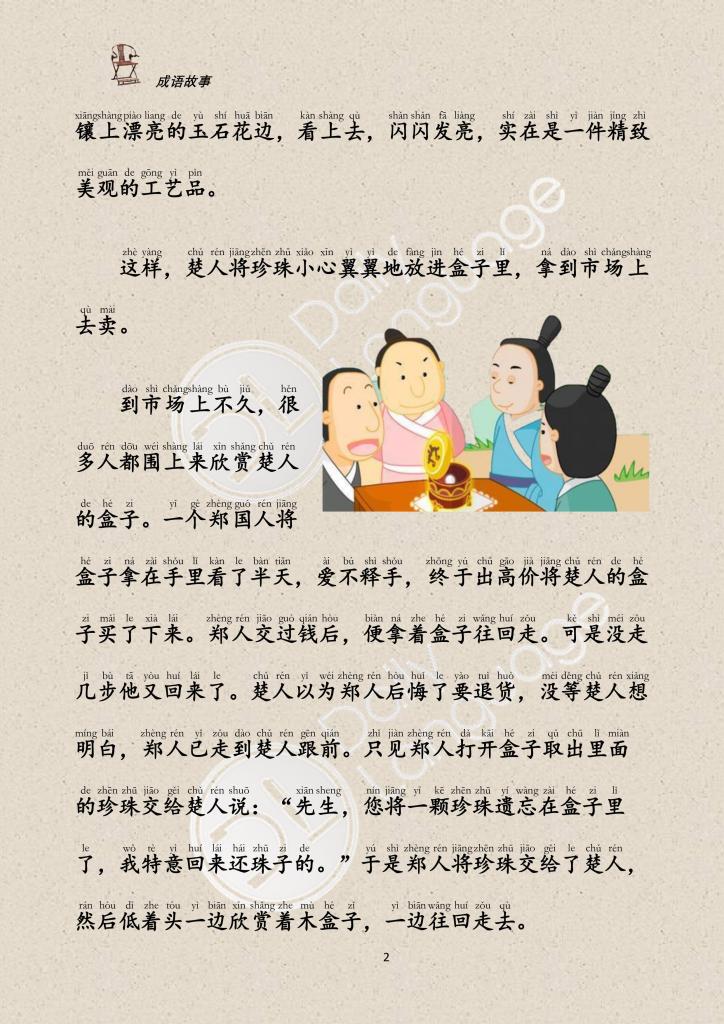
A man of the state of Zheng bought the casket and gave him back the pearl.

Too luxuriant decoration usually supersedes what really counts.

This man from Chu certainly knew how to sell a casket but he was no good at selling his pearl. And the man of Zheng didn’t know which is really valuable.

买椟还珠

mǎi dú huán zhū,买椟还珠,指买来装珍珠的木匣而退还了珍珠;比喻取舍不当,次要的东西比主要的还要好。 

出自战国时期韩非的《韩非子·外储说左上》。

例句

读一本书必须吸取精华,千万别干买椟还珠的蠢事。

我认为你修改这篇作文,是买椟还珠,取舍失当,把最能说明论点的那一段删掉了。

像这类买椟还珠、舍本逐末的事,他没有少做。

Reading The Paragraphs!

Meaning of Words


 词语华文解释英文解释
身价本意是指一个人的价值,多引申指一个人的身份或在社会中的地位。在旧时候,也指人身买卖的价格。日常生活中,也指某种物品的价格。
例句:这名球星的身价很高,转会费高达百万美元。
social status; price
手艺高超表示手工技术水平非常高。
例句:张爷爷从小就跟随名师研究陶艺,经过这么多年早就成为手艺高超的匠人。
skilled
香气扑鼻形容非常浓烈的香味直接冲进鼻中的感觉。
例句:春天里,校园里百花盛开,香气扑鼻
a sweet smell greets the nose
精雕(diāo)细刻意思是精心细致地雕刻;形容创作艺术品时的苦心刻画;也比喻认真细致地加工。
例句:山顶上当中有个八角亭子,名叫洗心亭,里面放着汉白玉的桌子和坐礅,都是精雕细刻,十分考究。
work at something with the care and precision of a sculptor
精致美观形容事物非常细致精巧,具有艺术的美感。
例句:这个艺术花瓶精致美观,摆在大厅入口正合适。
exquisite; beautiful
小心翼翼(yì yì)原形容严肃虔敬的样子,现用来形容言行举动十分谨慎,丝毫不敢疏忽大意。
例句:我小心翼翼的把这个精致的花瓶搬到了家里。
cautiously; careful
爱不释手意思是喜欢得舍不得放手。
例句:这个玩具火车太好玩了,真让小朋友爱不释手
admiringly; love
特意意思是专为某件事。
例句:为了小文的生日,小丁特意给他挑选了精致的杯子作为礼物。
for a special purpose; specially
遗忘表示对较早之前的事失去部分或全部的记忆。
例句:随着我渐渐长大,幼年的往事也慢慢的被遗忘了。
forgetting
尴尬(gān’gà)意思是指处境困难,窘迫,不知所措,不好处理。
例句:小华知道自己错怪了小明,感到十分尴尬,脸不由得红了。
awkward; embarrassed.
喧宾夺主(xuān bīn duó zhǔ)指客人的声音压倒了主人的声音。比喻外来的或次要的事物占据了原有的或主要的事物的位置。
例句:他很不识大体,经常在宴席上喧宾夺主,抢尽主人的风采。
the sauce is better than the fish
哭笑不得用来形容遇到可恨又可笑的事情时很尴尬的神情和心态。
例句:小安把香叶当成茶叶来泡,真是令妈妈哭笑不得
be able neither to cry nor to laugh; be at a loss whether to cry or to laugh; 
舍本求末意思是抛弃根本的、主要的,而去追求枝节的、次要的;比喻不抓根本环节,而只在枝节问题上下功夫。
例句:写文章只追求形式而不注重内容,那是舍本求末
attend to trifles and neglect the essentials
取舍不当形容所做的决定和选择不合适、不恰当。
例句:编辑认为我的小说修改取舍不当,反而将有趣的情节给删掉了。
wrong choice

成语——揠苗助长

Meaning of the Idiom

ya miao zhu zhang

Pulling up seedlings to help them grow do harm to a thing by being over-enthusiastic about it. 

To Pull up the Seedlings to Help Them Grow

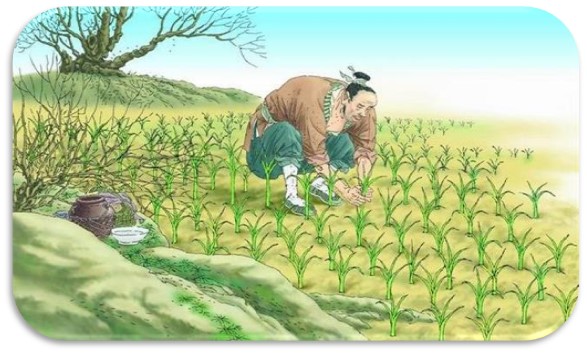
Once upon a time, an old farmer planted a plot of rice. Everyday he went to the field to watch the seedlings grow.

He saw the young shoots break through the soil and grow taller each day. But still, he thought they were growing too slowly. He got impatient with the young plants. “How could the plants grow faster?” He tossed in bed during the night and could not sleep. Suddenly he hit upon an idea. He had an idea not wait for daybreak. He jumped out of the bed and dashed to the field. By the moonlight, he began working on the rice seedlings. One by one, he pulled up the young plants by half an inch. When he finished pulling, it was already morning. Straightening his back, he said to himself, “What a wonderful idea! Look, how much taller the plants have grown one night!”

With great satisfaction, he went back home. He told his son what he had done in a triumphant tone. His son was shocked. Now the sun had risen. The young man was heart-broken to see all the pulled-up young plants dying.

People now use ” Ya Miao Zhu Zhang” to describe the behavior of those who are too eager to get something done only to make it worse. The idiom is a bit like the English proverb “Haste makes waste” ——to spoil things by excessive enthusiasm.

揠苗助长

yà miáo zhù zhǎng, 揠,意思是拔。揠苗助长,也可以说拔苗助长,意思是把禾苗拔起来,帮助其更快的成长。比喻违反事物的发展规律,急于求成,最后事与愿违。

出自《孟子·公孙丑上》。

例句

揠苗助长式的教育,是对学生个性的一种摧残。

采取揠苗助长的做法对这件事没多大帮助。

练习棋艺总须循序渐进,这种短期魔鬼式的训练,只能是揠苗助长

Reading The Paragraphs!

Meaning of Words


 词语华文解释英文解释
忧心忡忡(chōng chōng)忡忡:忧虑不安的样子。形容心事重重,非常忧愁。
例句:自从他拿到考试结果,就每天忧心忡忡,不敢告诉父亲。
worried
苦心思索意思是费尽精神苦苦思考,试图得到答案。
例句:福尔摩斯仔细检查了案件的所有线索,苦心思索了一夜,终于找到了凶手。
puzzle out
灵机一动意思是急忙中转了一下念头(多指临时想出了一个办法)。
例句:小刚点子多,灵机一动就想出个好主意。
brainwave
毫不犹豫形容人在处理事情上非常果断,没有片刻迟疑。
例句:听到男孩的呼救声,志文毫不犹豫的跳入河中救人。
without hesitation
杰作出色的作品,或指出色的制作。
例句:蒙娜丽莎带着神秘的微笑,十分传神,达芬奇的这副肖像画真是文艺复兴时期最有代表性的杰作
masterpiece
得意洋洋形容十分得意的样子。
例句:考试得了第一名,他得意洋洋地回了家。
triumphant
迫(pò)不及待意思是急迫得不能等待。形容心情急切。
例句:今天有足球赛,我刚进屋就迫不及待地打开了电视机。
can’t wait
半信半疑意思是一半相信,一半怀疑。表示对真假不敢肯定。
例句:尽管大家都这么说,他还是半信半疑
dubious
枯萎植物因干旱或更换枝叶等原因干枯萎缩;也可以比喻人的心情和状态逐渐低落,缺乏生气的样子。
例句:自从被摘下来的那一刻,玫瑰花就开始枯萎了。
withered; wilt
妄(wàng)自妄:胡乱的;妄自意思是自己随意的认为和想象。
例句:学海浩瀚,你只读了一点书,千万不可妄自尊大。
hubris
一事无成意思是连一样事情也没有做成,指什么事情都做不成,形容毫无成就。
例句:生活不能游戏人生,否则就会一事无成
accomplished nothing

成语——守株待兔

Meaning of the Idiom

shou zhu dai tu

Sitting by a Stump, Waiting for a Careless Hare

Meaning of people of high aspirations who lose no time to prepare themselves for a great future.

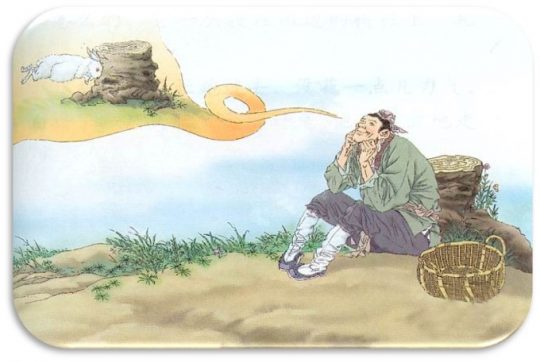
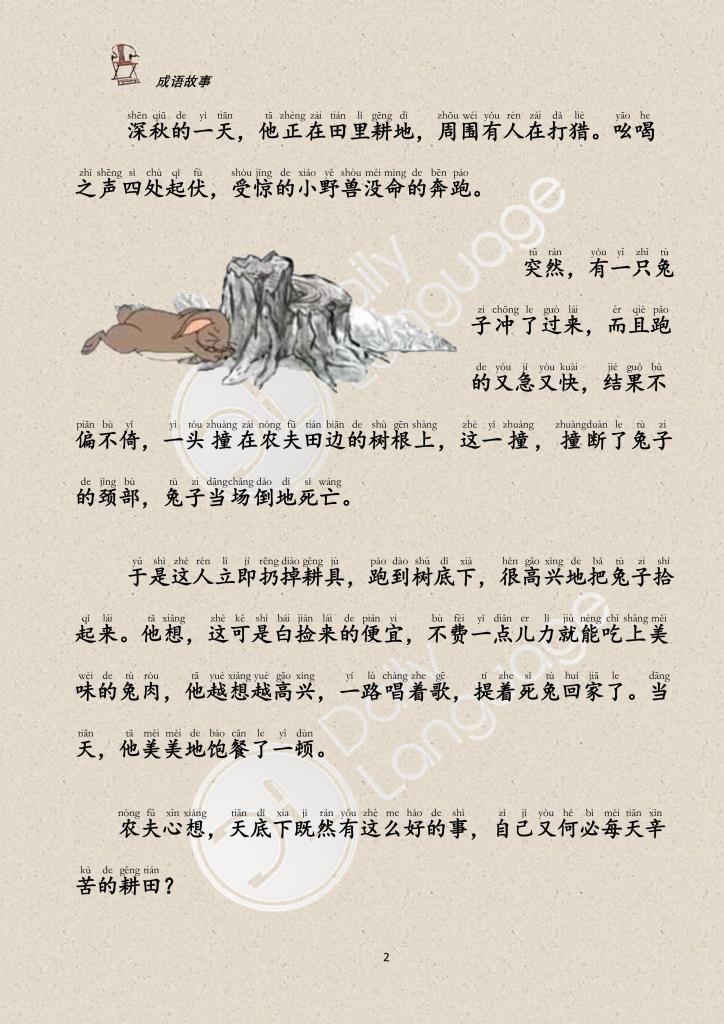
In the past, there was a farmer in the State of Song. There stood a big tree in the field he cultivated. One day, while working in the field, he suddenly saw a hare running by in front of him. The bare bumped against the big tree, broke its neck and died under the tree.

Without any effort, the farmer happily enjoyed a meal of bare meat. He was very pleased and thought how nice it would be if every day were like this.

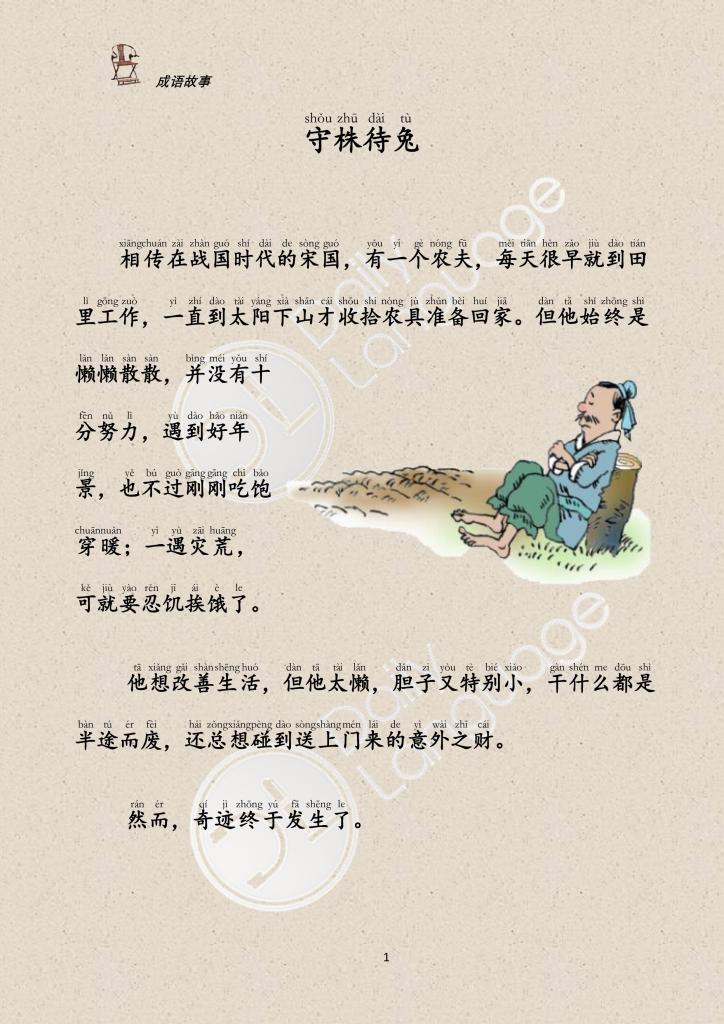
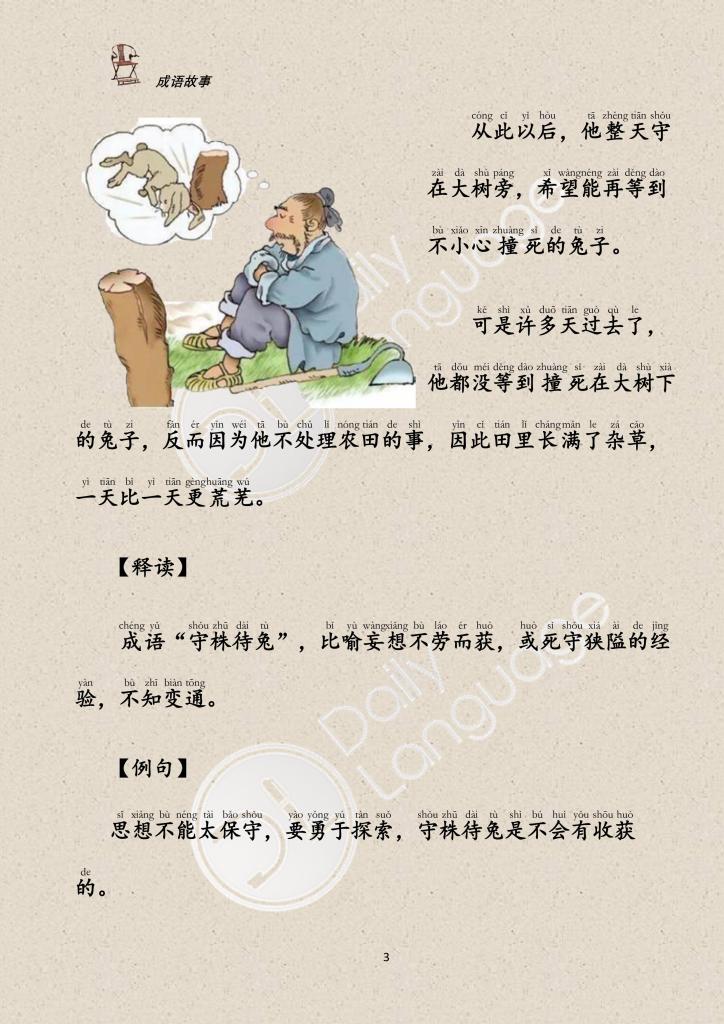
Thereupon, he no longer cultivated his land, but watched by that tree and waited for the chance to pick up another hare which knocked itself dead against the tree.

He waited and waited and watched. His field lay waste, but he never got a second hare. The people in the village laughed at him for taking the accidental for the inevitable.

守株待兔

shǒu zhū dài tù ,守株待兔,守在树旁等待兔子來。 株:树桩子。待:等。原意是对墨守成規者的讽刺。 比喻死守狭隘经验,不知变通,或抱著饶幸心理妄想不劳而获。 

出自先秦‧韩非《韩非子‧五蠹》。

例句

思想不能太保守,要勇于探索,守株待兔是不会有收获的。

一分耕耘,一分收获,年轻人千万不要抱著守株待兔的心态。

你成天只想著要考高分,却不肯脚踏实地的默默努力,这种守株待兔的心态真的很不可取。

Reading The Paragraphs!

Meaning of Words


 词语华文解释英文解释
懒懒散散意思是指人做事或者行为散漫随便。
例句:他星期天一早上开始就坐在那里不动,整天都懒懒散散的。
lazy and loosened
年景意思指年成,即一年的收成,可指过年的景象。
例句:俗话说“瑞雪兆丰年”,这么大的雪,一定有好年景
the year’s harvest
灾荒指自然给人造成的损害,如粮食歉收或绝收。
例句:灾荒和战争使人口减少了。
famine due to crop failure.
忍饥挨饿意思是忍受饥饿吃不饱饭或吃不上饭,形容极度贫困的生活状态。
例句:旱季提前到来,草木枯萎,野生动物们不得不忍饥挨饿,很多病弱的角马和羚羊没能活到第二年春天。
starving
半途而废意思是半路上就停下来了,比喻做事不能坚持到底,有始无终。
例句:立下了目标,就要努力完成,半途而废是不会有任何成就的。
to give up halfway;  do something by halves 
意外之财意思是意料之外的钱财。
例句:这次的彩票中奖让他得到了一笔意外之财
windfall
吆喝(yāo he)指大声喊叫或叫卖等。
例句:早市上熙熙攘攘,很多小贩大声吆喝,叫卖自己的货品。
yell
不偏不倚(yǐ)原指儒家的中庸之道,现指不偏袒任何一方,或正中目标,没有一点偏差。
例句:一只箭嗖的一声飞出去,不偏不倚正中靶心。
impartial; not leaning to the left or to the right; 
便宜常用于指东西价钱低廉或不应得的利益。
例句:他这个人没什么大毛病,就是有时候爱沾点儿小便宜
inexpensive; cheap
饱餐意思是尽量吃;饱饱儿地吃。
例句:等我们都从外国回来时,我一定约你们到我家去饱餐一顿。
eat one’s fill; glut
荒芜(wú)指荒凉,无人管理杂草丛生的土地。
例句:他们这次探险的最大挑战是要穿过一片荒芜的沙漠。
barren; desolation
不劳而获意思是自己不劳动而占有别人的劳动成果。
例句:在现实生活中,总有不少想不劳而获的人,他们总是想着能有好运会降临到自己身上。
reap where one has not sown
狭隘(xiá ài)指不宽阔,更多的引申为心胸、气量、见识等不宏大宽阔或非常局限。
例句:不要跟他这种狭隘的人打交道。
narrow
变通意思是依据不同情况,作非原则性的变动。遇特殊情况,可以酌情改变方式方法处理。
例句:疫情的处理方式,根据各地的具体情况,还可以有灵活变通的余地。
be flexible; accommodate something

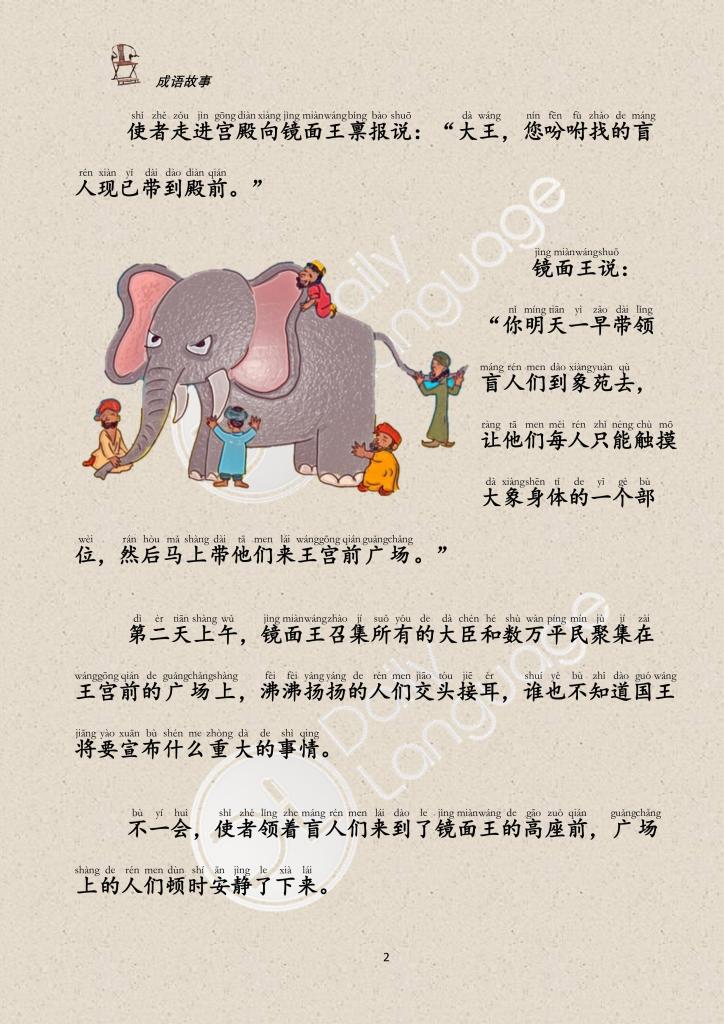
成语——盲人摸象

Meaning of the Idiom

mang ren mo xiang

make an overall judgement of something on the basis of one-sided viewpoint;

draw a conclusion [make a decision] on the basis of partial understanding;

draw a conclusion from incomplete data;

take a part for the whole

The Blind Men and the Elephant

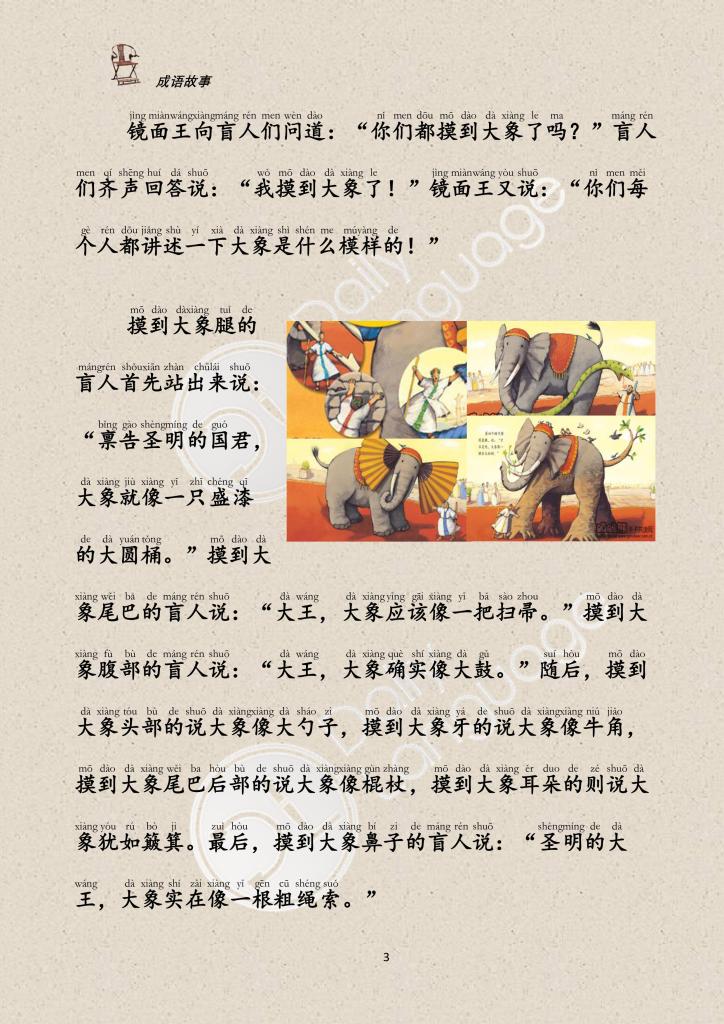
Once upon a time there were six blind men who lived in a village in India. Every day they went to the road nearby and stood there begging. They had often heard of elephants, but they had never seen one, for being blind, how could they?

One morning, an elephant was led down the road where they stood. When they heard that an elephant was passing by, they asked the driver to stop the beast so that they could have a “look”. Of course they could not look at him with their eyes, but they thought they might learn what kind of animal he was by touching and feeling him. For, you see, they trust their own sense of touch very much.

The first blind man happened to place his hand on the elephant’s side. “Well, well, ” he said. “This beast is exactly like a wall.”
The second grasped one of the elephant’s tusks and felt it. “You’re quite mistaken,” he said. “He’s round and smooth and sharp. He’s more like a spear than anything else.”
The third happened to take hold of the elephant’s trunk. “You’re both completely wrong,” he said. “This elephant is like a snake, as anybody can see.”
The fourth opened both his arms the closed them around one of the elephant’s legs. “Oh, how blind you are!” he cried. “It’s very clear that he’s round and tall like a tree.”
The fifth was a very tall man, and he caught one of the elephant’s ears. “Even the blindest person must see that this elephant isn’t like any of the things you name.” he said. “He’s exactly like a huge fan.”
The sixth man went forward to feel the elephant. He was old and slow and it took him quite some time to find the elephant at all. At last he got hold of the beast’s tail. “Oh, how silly you all are!” cried he. “The elephant isn’t like a wall, or a spear, or a snake, or a tree; neither is he like a fan. Any man with eyes in his head can see that he’s exactly like a rope.”

Then the driver and the elephant moved on, and the six men sat by the roadside all day, quarrelling about the elephant. They could not agree with one another, because each believed that he knew just what the beast looked like. It is not only blind men who make such stupid mistakes. People who can see sometimes act just as foolishly.

盲人摸象

máng rén mō xiàng , 意思是比喻对事物只凭片面的了解或局部的经验,就乱加猜测,想做出全面的判断;以偏概全,不能了解真相。

出自僧伽斯那《百喻经》。

例句

不了解事情的前因后果,总是去猜测,就像盲人摸象,解决不了问题。

就像盲人摸象,每个人都只看了不同的一部分。

只了解一个侧面就下结论,这和盲人摸象没什么两样。

Reading The Paragraphs!

Meaning of Words


 词语华文解释英文解释
信奉意思是信仰;敬奉。
例句:奶奶信奉佛教,心肠慈善,经常不计回报的帮助他人。
believe in; profess; faith in
虔(qián)诚指恭敬而有诚意的态度。
例句:阿拉罕对信仰非常虔诚,每天都按时做祷告。
devout
迷惑意思是辨不清是非;摸不着头脑;使人意识迷乱。
例句:这两份消息前后矛盾,令人对这一事件的原委十分迷惑
confuse
皈依(guī yī)归向依附。佛教术語,是成为正式佛教徒之前的宣誓仪式。
例句:他历经大起大落之后,有感于人生无常,决心皈依佛門。
convert
现身说法原指佛力广大,能现出种种人相,向人说法。现指以亲身经历和体验为例来说明某种道理。
例句:校长的现身说法,使人更加相信遇到危急情况应当如何自救。
act as an example to others
诱导指用启发诱惑的方式来引导思维或行为。
例句:读书的真正目的在于诱导头脑自己去思考。
induced
吩咐意思是指口头指派或嘱咐。
例句:她临走前吩咐女儿把房间整理好。
commanded; told
禀(bǐng)报指向上级或长辈报告。
例句:部长派出一名信使向首相禀报所发生的事。
report
沸沸(fèi fèi)扬扬像水沸腾后气泡、热气蒸腾翻滚一样,形容人声喧扰,议论纷纷。
例句:事情发生后的第二天,消息就在小镇沸沸扬扬地传开来了。
 discuss animatedly
交头接耳交头:头靠着头;接耳:嘴凑近耳朵。形容两个人凑近低声交谈。
例句:自习课上,同学们有的嘻嘻哈哈,有的交头接耳,秩序混乱。
whisper; speak in each other’s ears
圣明意思是指英明圣哲,无所不知。
例句:拥有一位圣明的君主无疑是臣民的幸运。
wise
簸箕(bò ji)一是指铲状器具,用以装垃圾;二是用藤条或去皮的柳条、竹篾编成的大撮子,扬米去糠的器具;
例句:她用扫帚将垃圾扫进簸箕,然后拿出去倒掉。
dustpan
争论不休争论:各抒己见,互相辩论。休:停止。意思就是双方或多方对某一个问题各执一词,讨论不出最终的结果,谁也不肯停下来。
例句:科学家和环保人士一直在为全球变暖的严重性争论不休
to keep arguing about something
争辩意思是辩论、争论。
例句:能否请大家各自说明,不要急于争辩
contend
意味深长指的是含蓄深远,耐人寻味。
例句:书中所述的人生哲理意味深长、发人深省。
meaningful

成语——亡羊补牢

Meaning of the Idiom

wang yang bu lao

It is not too late to mend the fold even after some sheep have been lost.

Meaning of it is never too late to mend.

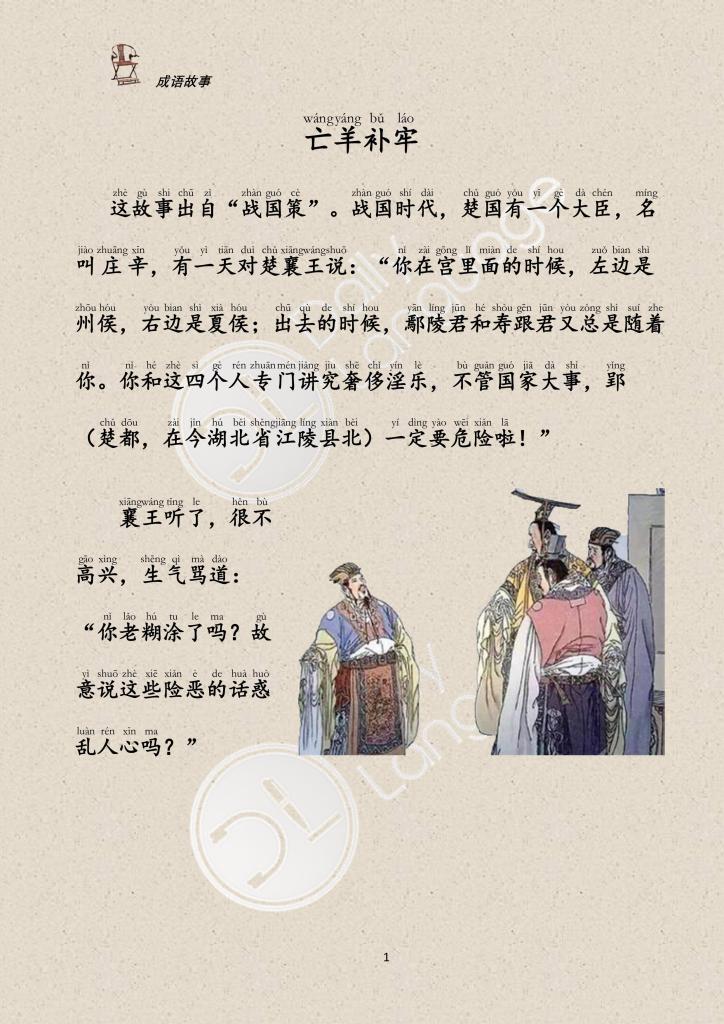
Once upon a time, there was a shepherd who kept several sheep.

One morning, the shepherd discovered that one of his sheep was missing. It turned out that, during the night, a wolf had stolen his sheep through a hole in the sheep pen.

His neighbor suggested to him:” You should fix the pen and cover the hole right away.”

But the shepherd said:” The sheep is already lost, so I don’t need to repair it.” And so he rejected the neighbor’s suggestion.

The next morning, he discovered that another sheep was missing. Once again, the wolf stole the sheep through the hole in the fence.

The shepherd regretted not taking the neighbor’s advice. So he plugged the hole to secure the sheep pen.

From then on, no more sheep was stolen by the wolf.

亡羊补牢

wáng yáng bǔ láo, 意思是羊逃跑了再去修补羊圈,还不算晚。比喻出了问题以后想办法补救,免得以后继续受损失。

出自《战国策·楚策》。

例句

这次试验没有成功,我们应该亡羊补牢,认真总结教训。

学习中出现问题我们要及时补救,亡羊补牢,再不犯类似的错误。

虽然电脑中了病毒,不过现在安杀毒软件,也是亡羊补牢为时不晚。

Reading The Paragraphs!

Meaning of Words


 词语华文解释英文解释
讲究多指注重外观表现,力求完美。
例句:衣服和鞋子是什么牌子,我都不怎么讲究,合身就行。
be particular about; pay attention to
奢侈淫乐(yín lè或者yín yuè)奢侈;浪费过度。淫乐,纵欲作乐。奢侈淫乐指生活奢华浪费过度,沉迷放纵。
例句:暴戾的独裁者终日沉迷于奢侈淫乐的生活,终于被民众起义推翻了。
sybarite
险恶指地势险阻恶劣;也可比喻人心或形势非常危险和恶劣。
例句:没想到他这么做是为了达到这个目的,好一条毒计。真是用心险恶
dangerous; perilous;
sinister; vicious; malicious
惑乱人心指让人心慌意乱。用虚假的谎言扰乱人心以致失去判断力,也指人心或社会慌乱。
例句:谣言就像瘟疫一样,会惑乱人心、影响稳定,成为社会公害。
mislead the masses
宠信指给予极度的偏爱和信赖。
例句:秦二世胡亥非常宠信奸臣赵高,几乎已经到了言听计从的地步。
specially trust
流亡指任何人或团体,因为自然灾害、受到侵略、迫害(包括政治迫害)或其他负面因素而离开出生或定居的国家、地区。
例句:这位作家因为揭露丑闻而被皇室驱逐,而只能流亡国外。
exile
诚恳一指诚实而恳切,形容不虚假的话;二指以光明磊落的动机做正确的事;三指真诚的恳求。
例句:打动童心的最佳方法是诚恳而慷慨地赞扬他们的每次进步。
sincere; earnest
享乐意思是享受安乐,享受快乐(多含贬义)。
例句:与其只追求在世上的享乐,不如为社会多做些贡献。
seek pleasure
悲惨意思是悲苦凄惨。
例句:卖火柴的小女孩在大年夜里冻死了,这个结局十分悲惨
tragic; wretchedness
挽救指从危险或不利中救回来。
例句:医生经过数个小时的紧急手术,终于挽救了他的生命。
remedy; rescue; save
轻举冒进比喻随意和冒险的推动事件的发展,不考虑有可能的风险和失误。
例句:对这次的项目他们考虑不周、轻举冒进,结果给公司造成了无法弥补的损失。
hazard; adventure; ventured in
境地所处的环境,境况。
例句:在丢失了露营装备以后,他们已经陷入孤立无援的境地
situation; position
气馁(něi)指失去信心与勇气,提不起精神再做任何事。
例句:哥哥没有考上大学并不气馁,他发奋努力,终于自学成才。
discouraged
耐心指心里不急躁,不厌烦。
例句:姐姐辅导功课非常有耐心,对弟弟不明白的部分反复讲解,终于让他完全掌握了这道题的解法。
forbearance; tolerance; patience

成语——闻鸡起舞

Meaning of the Idiom

wen ji qi wu

Rising Up upon Hearing the Crow of a Rooster to Practise Sword Playing.

Meaning of people of high aspirations who lose no time to prepare themselves for a great future.

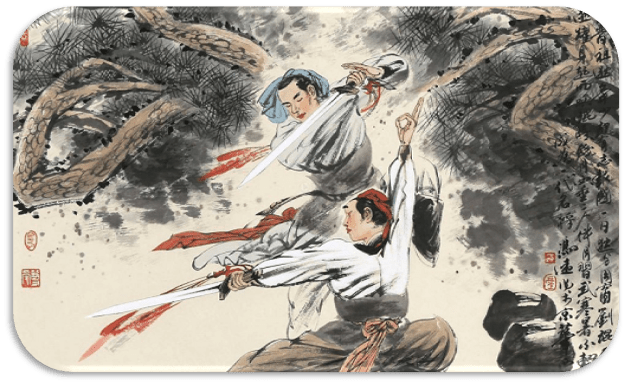
Zu Ti of the Jin Dynasty(265-420)was a big-hearted and farsighted person, however, he was very naughty and did not like to study when he was a small kid. When he became a young man, he felt acutely that his knowledge was inadequate and that he could not serve his country well if he did not study hard. So he put all his energies into his study. He read extensively, seriously studied history from which he absorbed rich knowledge, and made good progress in his studies.

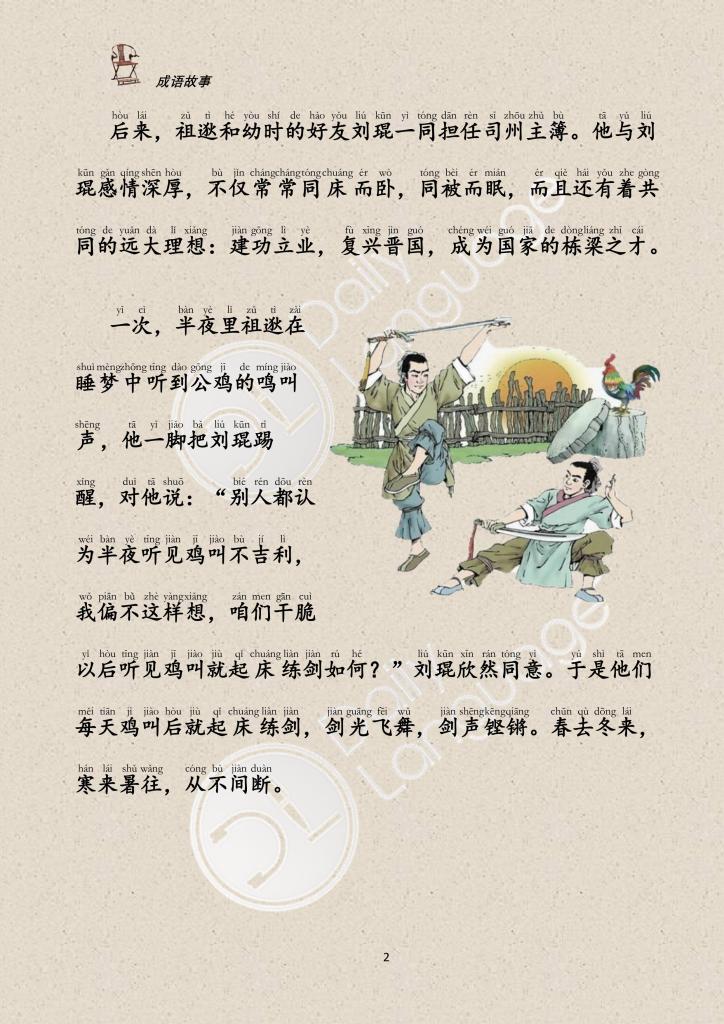
Later, both Zu Ti and Liu Kun, his best friend, were appointed chief clerks responsible for document administration in the Sizhou Prefecture. he and Liu Kun cherished a deep affection for each other. Once, Zu Ti heard a cock crow in the wasteland in his dream at midnight. He kicked Liu Kun a wake and saying to him:” People say it is inauspicious to hear a cock crow in the wasteland. I don’s think so. What about getting up and practicing sword playing the moment we hear the cock crow form now on?” Liu Kun agreed readily. So every day when the cock crow, they got up and practiced sword playing, the cold steel of the swords glinting and flashing. Day by day, they never stopped. Through long periods of hard study and training, they finally became versatile persons versed in both civil and military affairs. They could write good essays, and were capable of leading troops in fighting victoriously.

This story appears in “The Life of Zu Ti” in The History of the Jin Dynasty. From this story people have coined the set phrase” rising up upon hearing the crow of a rooster to practice sword playing” to signify that someone is exerting himself to do something worthwhile. It is also used to signify that a person of noble aspirations exerts himself in time.

闻鸡起舞

wén jī qǐ wǔ ,闻鸡起舞,原意为听到鸡啼就起来舞剑,后来比喻有志报国的人即时奋起。

出自《晋书·祖逖传》。

例句

他每天5点钟便起床锻炼身体,风雨无阻,这种闻鸡起舞的精神可敬极了。

越王勾践卧薪尝胆,闻鸡起舞,最后打败了吴国。

学习,就要有闻鸡起舞的精神,勤奋、勤奋、再勤奋。

Reading The Paragraphs!

Meaning of Words


 词语华文解释英文解释
胸怀坦荡胸怀是“心中所怀”,就是人对事物的宽容和承受力。胸怀坦荡就是敞开胸怀容载万物。
例句:她胸怀坦荡,从不隐瞒自己的过失。
open and poised; open affectionate heart
远大抱负意思是远大的志向、理想。
例句:人可以不介意从底层做起,但是一定要有远大抱负
great ambition
贫乏形容钱财上或精神上穷困,贫困;欠缺,不足。
例句:我们愈是学习,愈感觉到自己的贫乏
poor; short; lacking
报效意思是为报恩而效力。
例句:国家遭受到了恐怖分子的袭击,士兵知道报效祖国的时机来到了。
serve
汲(jí)取意思是吸取、吸收。
例句:他们自以为从过去的错误中汲取了教训。
draw; derive; absorb
辅佐(fǔ zuǒ)协助,多指政治上,如协助君主治理国家 。
例句:选举人团队全心全意地辅佐候选人,终于让他获得足够的选票当选总统。
assisted; adjuvant 
推荐意思是推荐,介绍。
例句:昨天,老师向我们推荐了几本适合小学生阅读的书。
recommended
不懈(xiè)指不放松;不松懈;不间断的。
例句:我们为您在寻求和平方面做出的不懈努力向您表示敬意。
persisting; steady; untiring 
栋梁之才栋梁,支持房屋的大梁。 栋梁之才,比喻能肩负国家重任、担当大事的人才。
例句:每个青年都应该努力向上,刻苦学习,使自己成为国家的栋梁之才
 a man of tremendous promise;
欣然意思是非常愉快的,自然的(指表情上的)高兴的样子。
例句:她未经思考就欣然接受邀请。
readily
铿锵(kēng qiāng)形容乐器声音响亮有力,也用于形容人声洪亮或深沉坚定。同时用来形容诗词文曲声调响亮,节奏明快。铿锵是象声词,有响亮和激越的含意。
例句:这首十四行诗读起来音调铿锵,回味无穷。
sonorous
文韬武略(wén tāo wǔ lüè)表示文武双全、大智大勇,在军事政治等方面具有卓越才能的人。
例句:孙权文韬武略、胆识过人,不愧为一代豪杰。
military expertise

成语——铁杵磨针

Meaning of the Idiom

Tie Chu Mo Zhen

Constant grinding can turn an iron rod into a needle. 

Constant dropping wears away a stone.

If you work at it hard enough, you can grind an iron rod into a needle — perseverance spells success.

Little strokes fell great oaks.

With time and patience the leaf of the mulberry becomes satin.

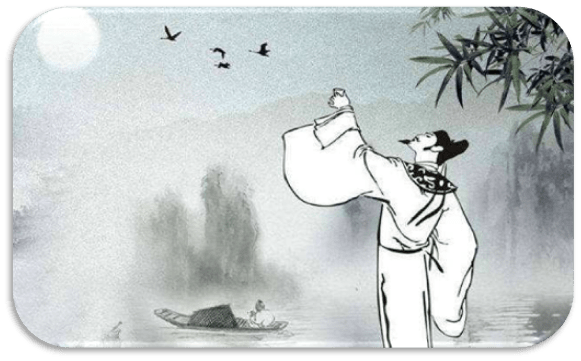
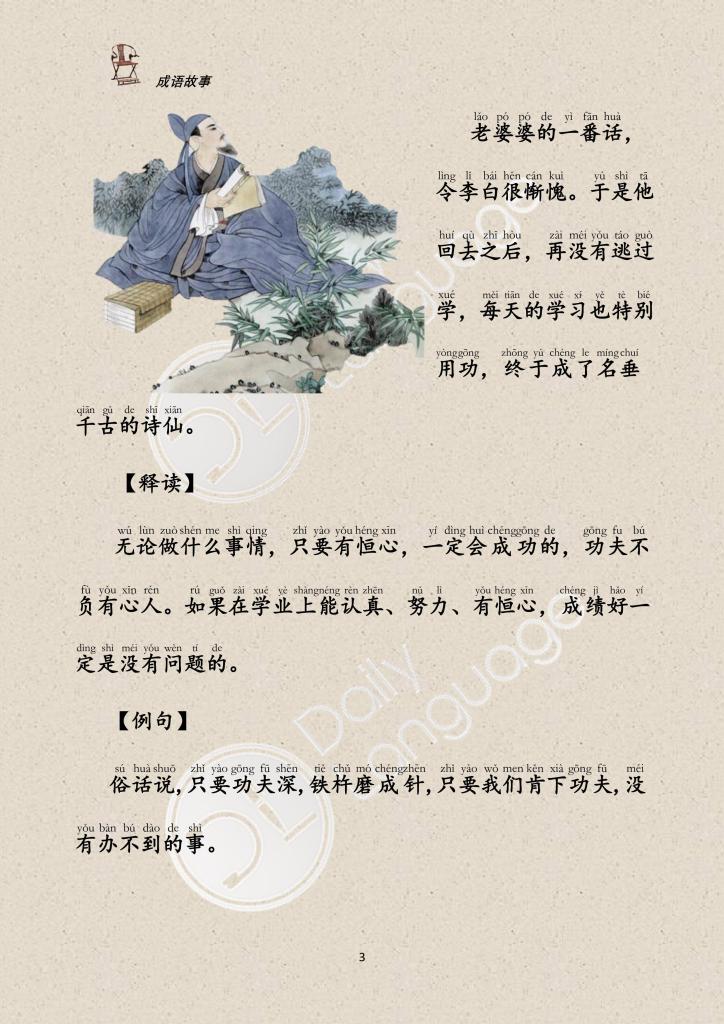
Li Bai was a great poet in the Tang Dynasty of China. It is said that in his childhood, he was very fond of playing and afraid of difficulties, and made slowly progress. One day, on his way home after school, he walked by a creek and saw an old woman grinding a iron rod. Being curious, he went to the old woman and asked:” Old grandma! why are you grinding this iron?” The old woman replied:“To make a needle.” At this moment, Li Bai felt more curious and asked again: “How can you grind such a thick iron rod into a needle?” “Yes, I can. Certainly I can.” the old woman said,  “If you work at it hard enough, you can grind an iron rod into a needle.” Heard the old woman’s words, Li Bai was enlightened.

Since then, Li Bai studied hard and made rapid progress. Eventually he became a famous poet.

 

铁杵磨针

tiě chǔ mó zhēn ,比喻只要有决心,肯下工夫,多么难的事情也能做成功。

出自南宋祝穆的《方舆胜览》。

例句:

俗话说:只要功夫深,铁杵磨成针,只要我们肯下功夫,没有办不到的事。

做任何事,我们都要有要有百折不挠的精神和铁杵磨针的毅力,切忌邯郸学步,否则只能一无所成。

过目不忘的天资固然可贵,但铁杵磨针的毅力却更值得称颂。

Reading The Paragraphs!

Meaning of Words

 词语华文解释英文解释
闲逛随便走走,无目的的闲荡。
例句:自从丢掉工作以后,他总是在街头闲逛,无所事事。
wander
不知不觉意思是自己没有意识到,没有察觉到。
例句:海边的景色是那么迷人,我们竟然不知不觉走了几个小时。
unconsciously
感叹不已意思是形容因为惊奇敬佩而发出的感叹久久不止,感受至深。
例句:原来,这个8岁的孩子竟然担负起照顾患病父亲的责任,让所有在场的人惊讶之余,感叹不已
sigh; suspire
茅屋是用芦苇、稻草等作为屋顶的简陋房子。
例句:这片森林人迹罕至,只有小径附近的一座猎人藏身的茅屋可以躲避风雨。
hut
铁杵古时候铁制的一头粗一头细的圆棒,用来压米或捶衣用的棒。
例句:传说中嫦娥养了一只可爱的白兔,在月亮上用一根铁杵捣药。
iron
反问 反过来对提问的人发问。
例句:面对无礼的质疑,他反问道:“为什么我就不能说不?”
answer back 
惭愧 指因有缺点、错误或未能尽责等而感到不安或羞耻的情绪;或者表示自谦的感幸之词。
例句:在意识到是自己导致了比赛的失败,他感到非常惭愧
ashamed 
名垂千古 比喻好名声永远流传。
例句:宋代名将岳飞,以他的精忠报国精神名垂千古
immortality
恒心 一指持之以恒的毅力,坚持达到目的或执行某项计划的决心;二指持久不变的意志;三指人常有的善良本心。
例句:只要人有恒心,一定能有所成就。
 constancy, perseverance
功夫不负有心人 意思是只要用心去做某事,就会取得成功。
负:辜负,对不起。
例句:经过一年的刻苦训练,他终于一次通过了体能测验,真是功夫不负有心人啊!
 Everything comes to him who waits.