成语——黔驴技穷

Meaning of the Idiom

qian lu ji qiong

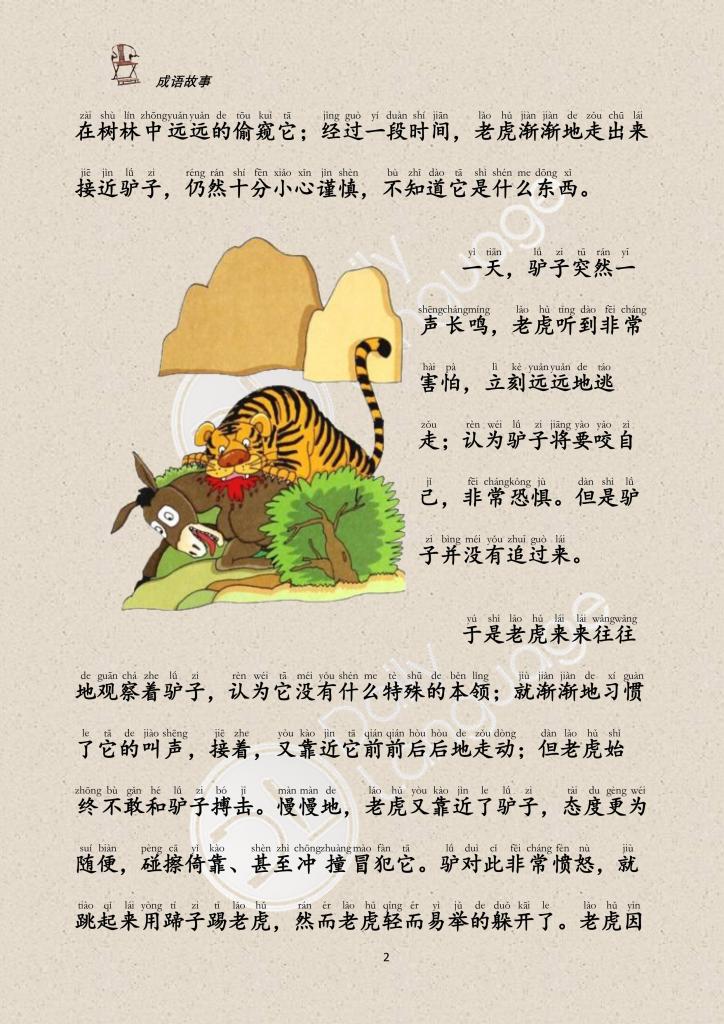
In ancient times there were no donkeys in Guizhou province. Somebody brought a donkey from somewhere and tied it to a tree at the foot of a mountain.

A tiger saw the donkey, and thought that it must be a fearsome monster. It hide behind a tree and spied on the donkey.

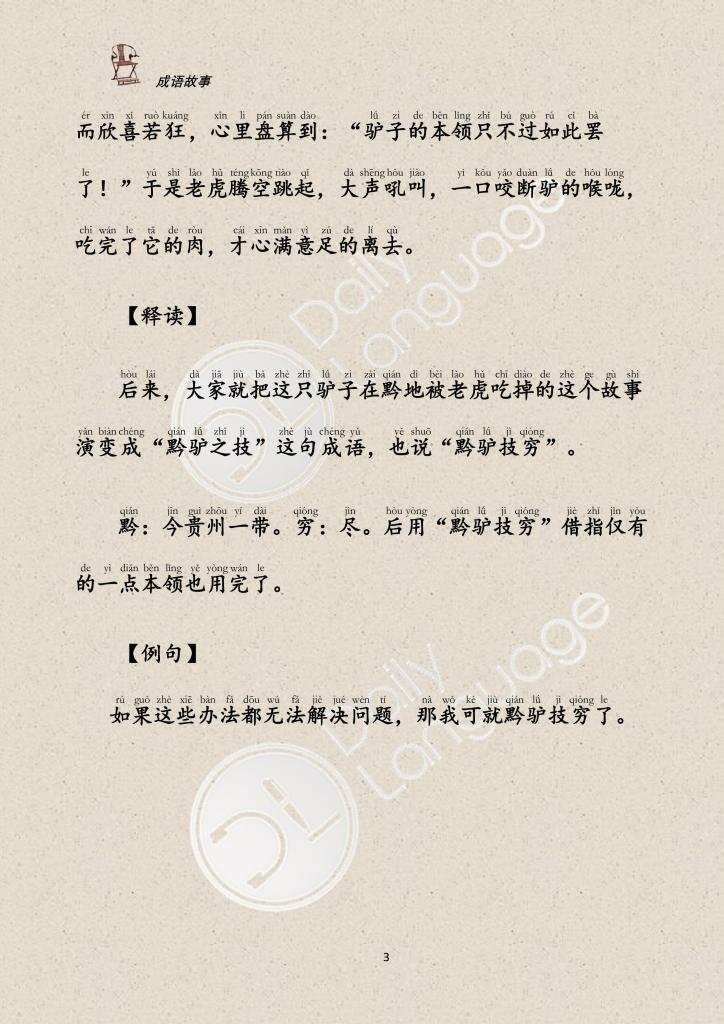
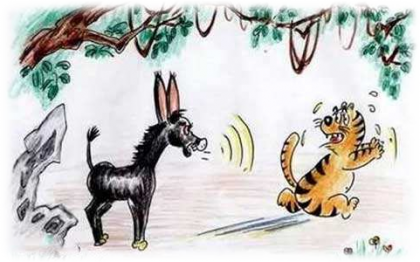
When the donkey brayed, the tiger was frightened, thinking that the donkey was about to devour it.

After a while, seeing that the donkey had not moved, the tiger approached it and teased it. The donkey became angry, and kicked the tiger.

The tiger thought to itself: “Its then all it is capable of?” It then jumped on the donkey and ate it.

This idiom is used to mean that one has exhausted one’s skills.

黔驴技穷

qián lǘ jì qióng。 黔:今贵州一带。穷:尽。现用“黔驴技穷”借指仅有的一点本领也用完了。

出自唐·柳宗元的《三戒·黔之驴》。

例句

如果这些办法都无法解决问题,那我可就黔驴技穷了。

现在看来,这个可恶的家伙已经是黔驴技穷了,我们对他不得不防着点。

若不是他已到了黔驴技穷的地步,怎么可能无奈的放弃呢!

Reading The Paragraphs!
Meaning of Words


 词语华文解释英文解释
喜好指兴趣;爱好。
例句:林先生喜好下棋,每周都会找朋友下几局。
be fond of
溜达也作“蹓跶”。意思是闲逛、漫步。
例句:他在河边来回溜达,希望找几块漂亮的石头。
stroll; saunter; go for a walk
惬(qiè)意形容心情感到愉快、舒畅,或满意、舒服。
例句:最近人们都喜欢乘坐邮轮,因为可以轻松惬意的旅行。
comfortable
觅(mì)食意思是寻找食物,泛指动物到处搜寻食物吃,是动物生存行为中的一种基本方式。
例句:长期进化的结果,使每种动物的觅食方式都有各自特点。
look for food
偷窥是指暗中观察,偷看。
例句:这个人鬼鬼祟祟,经常趴在墙角偷窥邻居家的一举一动。
peek
谨慎(jǐn shèn)指对外界事物或自己言行密切注意,以免发生不利或不幸的事情。
例句:志明新考取了驾照,父亲嘱咐他开车上路时一定要小心谨慎
carefully; prudent; discreet; cautious
长鸣意思是用乐器或发声器官发出较长时间的鸣叫。
例句:每年全民防卫日的警笛长鸣,是为了提醒我们时刻牢记国家安全。
long tweet
搏(bó)击可以指搏斗,也指惩处打击或陷害等。
例句:两只雄狮为了争夺领地,在河岸上展开了激烈的搏击
fight
轻而易举形容事情容易做,不费力,省事。
例句:事情并不象阿福想的那样轻而易举
be an easy job to
欣喜若狂意思是形容高兴、兴奋到了极点。
例句:这一颗彗星的发现,使几位天文工作者欣喜若狂
ecstatic; overjoyed
盘算指筹划谋算;形容对事情的经过或结果进行仔细而从容的反复思考、考虑。
例句:见今年的苗圃接了很多瓜果,老人家不由得盘算明年再多种些蔬菜。
figuring
心满意足用来形容做了某事或得到什么事物等,自己心情很愉悦高兴,让自己觉得满意。
例句:妈妈常对我说:“只要你能快乐地长大,我就心满意足了。”
contented; satisfied

成语——按图索骥

Meaning of the Idiom

an tu suo ji

Looking for a Steed with the Aid Of Its Picture

During the Spring and Autumn Period (chūn qiū ,770-476 BC), there was a man in the State of Qin whose name was Sun Yang (sūn yáng ). Sun Yang was very expert in looking at horses and judging their worth. People called him Bo Le (Bo Le was fabled to be in charge of heavenly steeds as a celestial), and he was often asked to appraise and select horses.

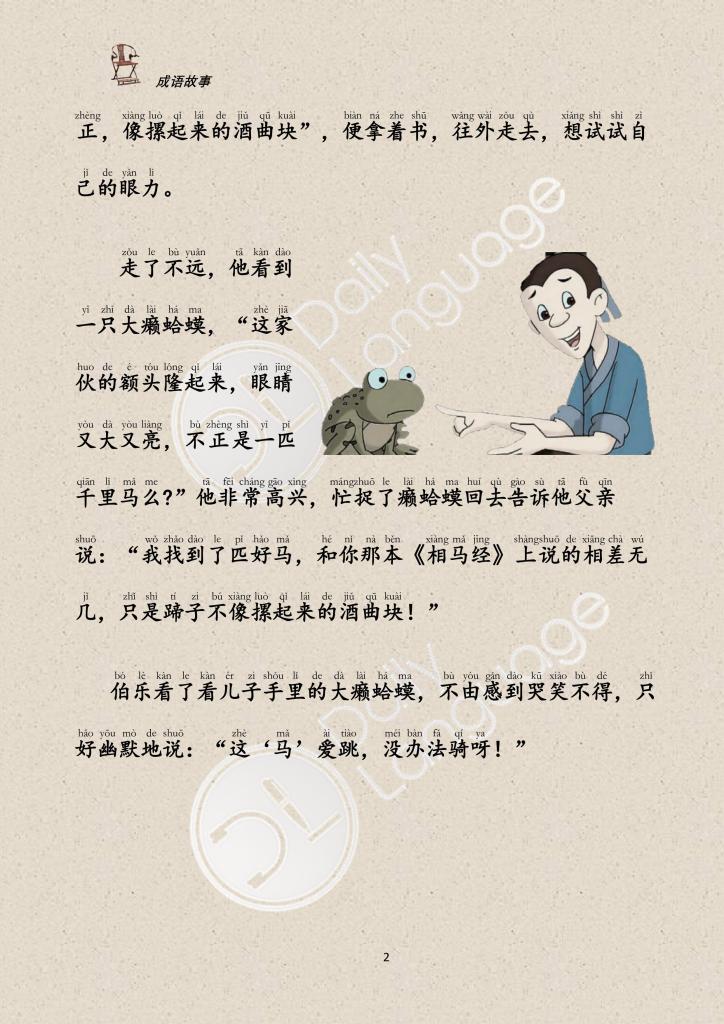
Bo Le wrote a book entitled The Art of Looking at Horses and Judging Their Worth, based on his experiences and knowledge accumulated over the years. The book was also illustrated with the pictures of various horses. Bo Le had a son who thought it was very easy to appraise horses according to the book. So he took it with him to look for fine horses. He found the characteristics of a toad fit very well the characteristics described in the book. So he happily took the toad back home, Bo Le did not know whether he should laugh or cry. “That is just what we call looking for a steed with the aid of its picture.”

Later, people have used the set phrase “look for a steed with the aid of its picture” to refer to handling affairs mechanically in the outmoded ways without being flexible. Sometimes it is also used to refer to trying to locate something by following up a clue.

按图索骥

àn tú suǒ jì,按图索骥是由寓言故事演化而来,指按照图像寻找好马,比喻按线索寻找,也比喻办事机械、死板。 

出自《汉书·梅福传》、《艺林·伐山》。

例句

警察根据已经发现的线索,按图索骥,很快找到了那批被盗文物。

有些读者,不明白文字后面的深层寓义,常常按图索骥,已近于理解错误。

做好一件事必须要亲身实践,纸上谈兵和按图索骥的做法都应当反对。

Reading The Paragraphs!

Meaning of Words


 词语华文解释英文解释
相( xiāng)传指长期以来互相传说。
例句:七夕节是个历代相传的节日。
legend
相(xiàng)马指通过外观和状态来观察和识别马的好坏。
例句:古时候,马是重要的交通工具,因此相马成为一种非常重要和特别的工作。
to judge horses
辨别对不同的事物在认识上加以区别。
例句:他辨别声音的能力很强。
identify
孰(shú)优孰劣意思是谁好谁坏。
例句:这几所学校的广告都做得精彩异常,但孰优孰劣还是要看学生的表现才知道。
relative merits
尊称意思是尊敬的称呼。
例句:医护人员都穿着雪白的大褂,被人们尊称为“白衣天使”。
address somebody respectfully; honorific title
形态特征形态:形式或状态。指事物存在的样貌,或在一定条件下的表现形式。特征:是一个事物与其他事物不同的特点。
例句:玫瑰和月季的花朵在形态特征上都十分相似。
form; shape; pattern
character
资质指人的天资、禀赋。或指从事某种工作或活动所具备的条件、资格、能力等。
例句:小班教学的优点,是让老师可依据学生的资质能力来因材施教,给学生更多的成长空间。
natural endowments; intelligence
酒曲指一种包含各种活性菌种用来酿酒的混合物。
例句:这些米酒是用酒曲酿造的,非常香甜.
distillers yeast
相差无几意思是彼此没有多大差别。
例句:中美两国的国土面积相差无几,但是中国人口数量是美国的好几倍。
not much difference between
哭笑不得用来形容遇到可恨又可笑的事情時很尴尬的神情和心态。
例句:小安把香叶当成茶叶来泡,真是令妈妈哭笑不得
be able neither to cry nor to laugh; be at a loss whether to cry or to laugh; 
幽默形容有趣或可笑而意味深长。
例句:小刚这个人幽默风趣,大家都喜欢和他聊天。
humor; humour
拘泥教条(jū nì jiào tiáo)形容做事时只按照固有的框架,不知道变通。
例句:朱先生是个拘泥教条的老人,他总是对年轻人的穿着嗤之以鼻。
inflexible; starchiness
墨守成规指思想保守,守着老规矩不肯改变。
例句:纵然大家都改用电脑来辅助设计,他仍然墨守成规,用老方法来画设计图。
legalistic

成语——买椟还珠

Meaning of the Idiom

mai du huan zhu

Get the casket and return the pearl

Meaning of judge a book by its cover, choose the wrong thing。

A man from the state of Chu wanted to sell a precious pearl in the state of Zheng. 

He made a casket for the pearl out of the wood from a magnolia tree, which he fumigated with spices. He studded the casket with pearls and jade, ornamented it with red gems and decorated it with kingfisher feathers.

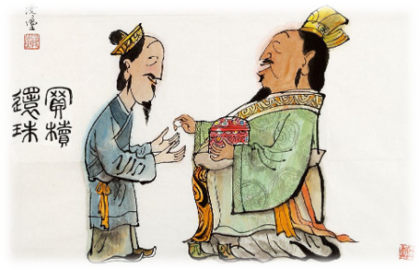
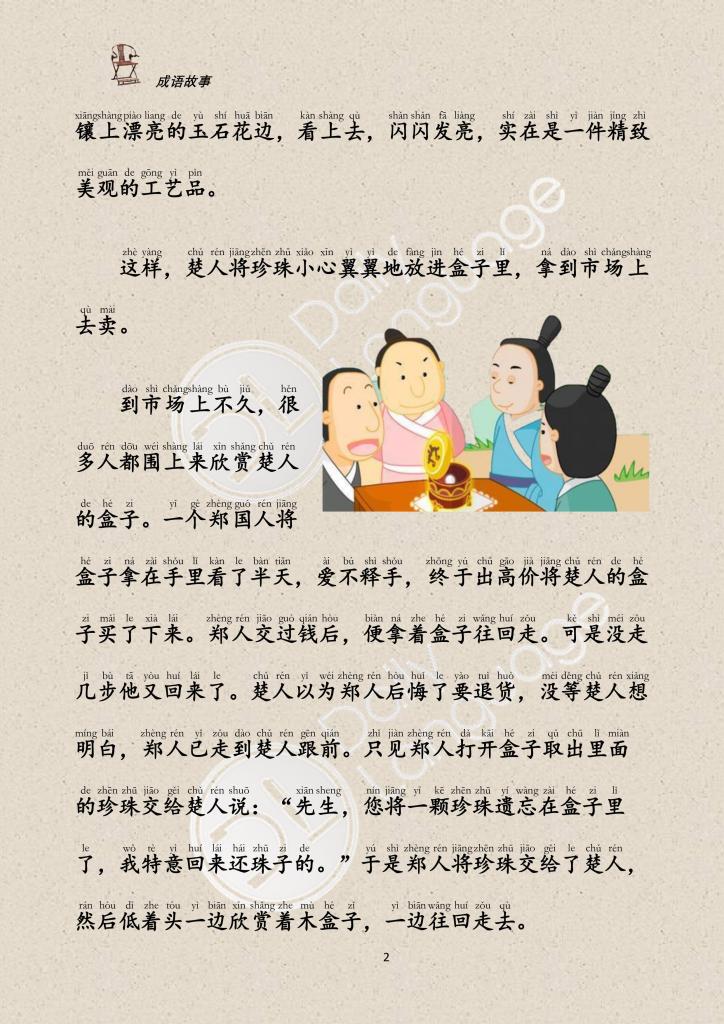
A man of the state of Zheng bought the casket and gave him back the pearl.

Too luxuriant decoration usually supersedes what really counts.

This man from Chu certainly knew how to sell a casket but he was no good at selling his pearl. And the man of Zheng didn’t know which is really valuable.

买椟还珠

mǎi dú huán zhū,买椟还珠,指买来装珍珠的木匣而退还了珍珠;比喻取舍不当,次要的东西比主要的还要好。 

出自战国时期韩非的《韩非子·外储说左上》。

例句

读一本书必须吸取精华,千万别干买椟还珠的蠢事。

我认为你修改这篇作文,是买椟还珠,取舍失当,把最能说明论点的那一段删掉了。

像这类买椟还珠、舍本逐末的事,他没有少做。

Reading The Paragraphs!

Meaning of Words


 词语华文解释英文解释
身价本意是指一个人的价值,多引申指一个人的身份或在社会中的地位。在旧时候,也指人身买卖的价格。日常生活中,也指某种物品的价格。
例句:这名球星的身价很高,转会费高达百万美元。
social status; price
手艺高超表示手工技术水平非常高。
例句:张爷爷从小就跟随名师研究陶艺,经过这么多年早就成为手艺高超的匠人。
skilled
香气扑鼻形容非常浓烈的香味直接冲进鼻中的感觉。
例句:春天里,校园里百花盛开,香气扑鼻
a sweet smell greets the nose
精雕(diāo)细刻意思是精心细致地雕刻;形容创作艺术品时的苦心刻画;也比喻认真细致地加工。
例句:山顶上当中有个八角亭子,名叫洗心亭,里面放着汉白玉的桌子和坐礅,都是精雕细刻,十分考究。
work at something with the care and precision of a sculptor
精致美观形容事物非常细致精巧,具有艺术的美感。
例句:这个艺术花瓶精致美观,摆在大厅入口正合适。
exquisite; beautiful
小心翼翼(yì yì)原形容严肃虔敬的样子,现用来形容言行举动十分谨慎,丝毫不敢疏忽大意。
例句:我小心翼翼的把这个精致的花瓶搬到了家里。
cautiously; careful
爱不释手意思是喜欢得舍不得放手。
例句:这个玩具火车太好玩了,真让小朋友爱不释手
admiringly; love
特意意思是专为某件事。
例句:为了小文的生日,小丁特意给他挑选了精致的杯子作为礼物。
for a special purpose; specially
遗忘表示对较早之前的事失去部分或全部的记忆。
例句:随着我渐渐长大,幼年的往事也慢慢的被遗忘了。
forgetting
尴尬(gān’gà)意思是指处境困难,窘迫,不知所措,不好处理。
例句:小华知道自己错怪了小明,感到十分尴尬,脸不由得红了。
awkward; embarrassed.
喧宾夺主(xuān bīn duó zhǔ)指客人的声音压倒了主人的声音。比喻外来的或次要的事物占据了原有的或主要的事物的位置。
例句:他很不识大体,经常在宴席上喧宾夺主,抢尽主人的风采。
the sauce is better than the fish
哭笑不得用来形容遇到可恨又可笑的事情时很尴尬的神情和心态。
例句:小安把香叶当成茶叶来泡,真是令妈妈哭笑不得
be able neither to cry nor to laugh; be at a loss whether to cry or to laugh; 
舍本求末意思是抛弃根本的、主要的,而去追求枝节的、次要的;比喻不抓根本环节,而只在枝节问题上下功夫。
例句:写文章只追求形式而不注重内容,那是舍本求末
attend to trifles and neglect the essentials
取舍不当形容所做的决定和选择不合适、不恰当。
例句:编辑认为我的小说修改取舍不当,反而将有趣的情节给删掉了。
wrong choice