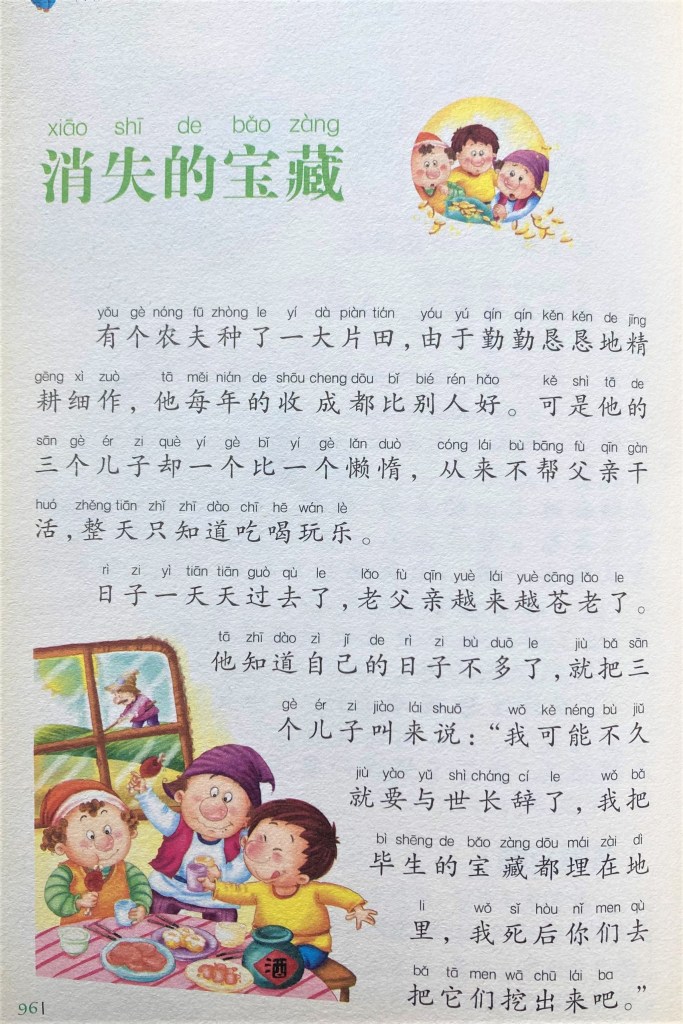
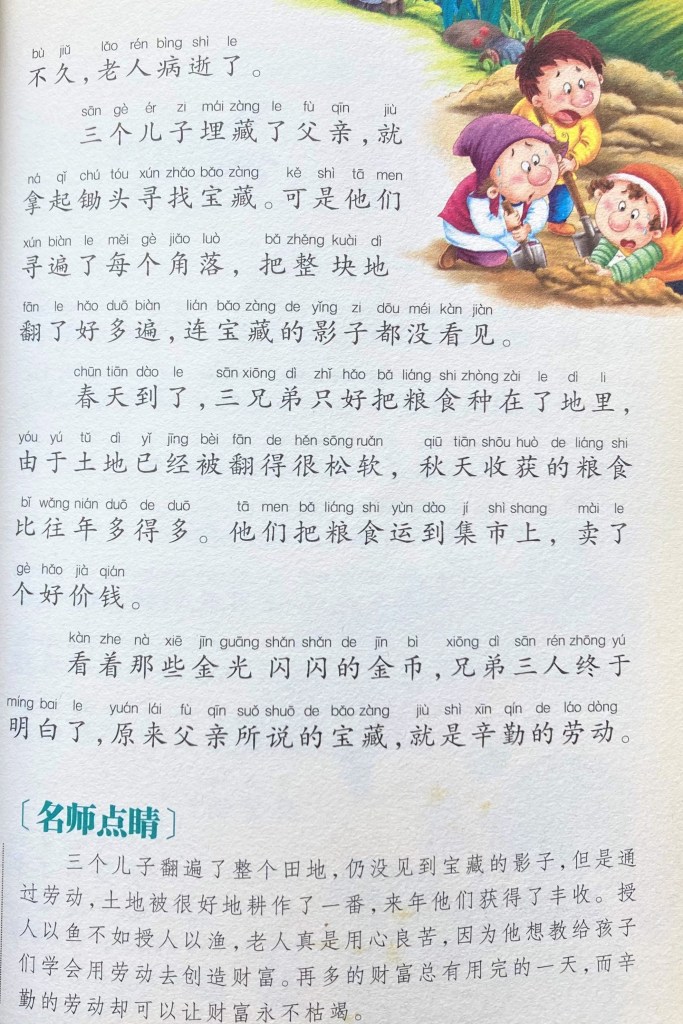
A farmer being on the point of death and wishing to show his sons the way to success in farming, called them to him, and said; “My children, I am now departing from this life, but all that I have to leave you, you will find in the vineyard.”
The sons, supposing that he referred to some hidden treasure, as soon as the old man was dead, set to work with their spades and ploughs and every implement that was at hand, and turned up the soil over and over again. They found indeed not treasure, but the vines, strengthened and improved by this thorough tillage, yielded a finer vintage than they had ever yielded before. This more than repaid the young husbandmen for all their trouble.
wang mei zhi ke(Quenching Thirst by Watching Plums)
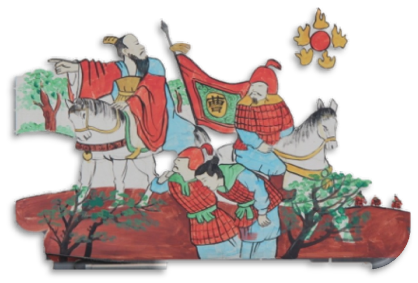
One summer, Cao Cao was leading his troops in a punitive expedition against Zhang Xiu. It was extraordinarily hot. The burning sun was like a fire, and the sky was cloudless. The soldiers were walking on the winding mountain paths. The dense forest and the hot rocks exposed to the sun on both sides of the paths made the soldiers feel suffocated. By noontime the soldiers’ clothes were wet through with sweat, and the marching speed slowed down. Some solders of weak physique even fainted on the roadside.
Seeing that the marching speed was slower and slower, Cao Cao was very worried because he feared that he might bungle the chance of winning the battle. But how could they quicken their speed? Cao Cao at once callde the guide and asked him on the quiet whether there was a source of water nearby. The guide shook his head, saying that the spring water was on the other side of the mountain, which was very far to have to make a detour to reach. Cao Cao realized that time didn’t permit them to make such a detour.
After thinking for a moment, he said to the guide, “Keep quiet. I’ll find a way out.” He knew that it would be to no avail to order his troops to quicken the steps. He had a brain wave and found a good solution. He spurred his horse and came to the head of the column. Pointing his horsewhip to the front, Cao Cao said, “Soldiers, I know there is a big forest of plums ahead. The plums there are both big and delicious. let’s hurry along, and we will reach the forest of plums after bypassing this hill.” When the solders heard this, they immediately slobbered. Picturing in their minds the sweet and sour flavour of the plums, the soldiers felt as if they were actually eating the plums, the soldiers felt as if they were actually eating the plums themselves. The morale greatly boosted, the soldiers quickened their steps a great deal automatically.
This story comes from “The Fake Tangery” in Anecdotes of This World by Liu Yiqing of the Southern Dynasties period (420-589). From this story, people have derived the set phrase “quenching thirst by watching plums” to refer to trying to comfort oneself of others by idle dreams.
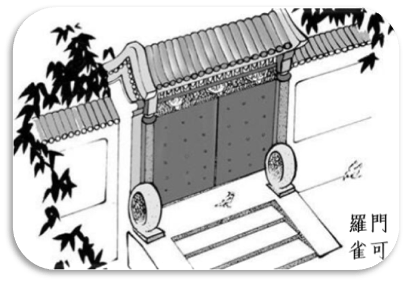
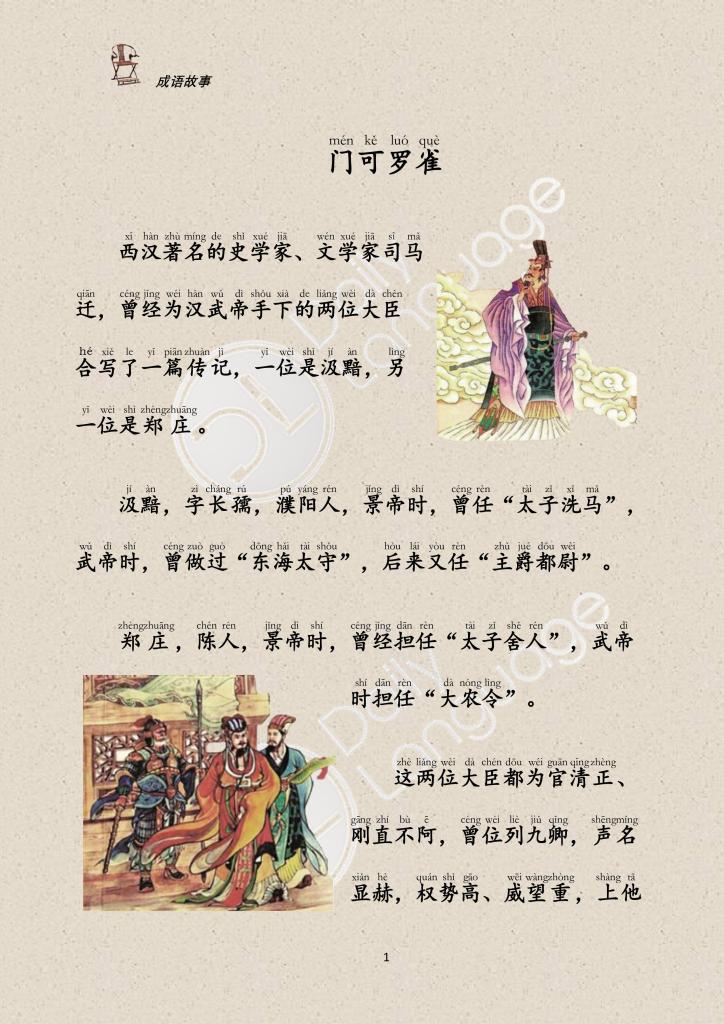
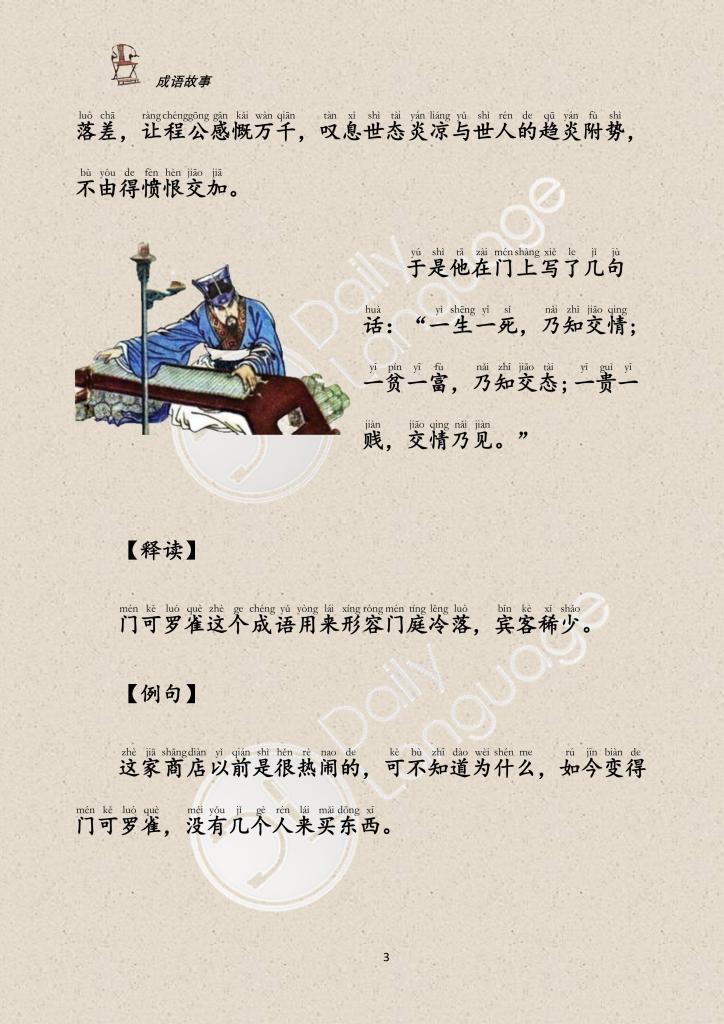
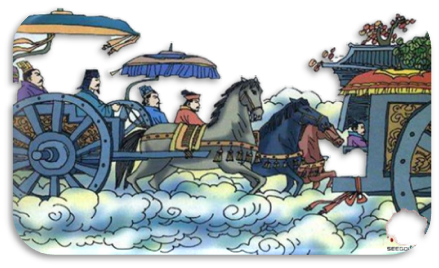
Because he held a very high-ranking and powerful position, many of his friends, relatives, and even acquaintances whom he barely knew often went to call on him. So all day long, horses and chariots were lined up in front of his house; it was really as if “the courtyard was as crowded as a marketplace.”
Later, however, Duke Jai had the sad misfortune of being removed from office.
His friends and relatives then stopped going to see him, and soon the only ones left in front of his house were flock of sparrows which would fly about and stop to rest on his doorstep.
Not long afterwards, Duke Jai was reinstated. As soon as his friends and relatives heard the news, they all once again began to ride their horses or drive their chariots back to visit him.
Duke Jai, however, was now unwilling to see them, and door reproving those who would only associate with people of wealth and status.
Today, we can use this idiom to describe any place which has been deserted, or where people are few.
Empress Ma did not want her people to be appointed as officials by the emperor.
In order to persuade the emperor, she said that she walked through the gate of Zhuolong and looked outside. The carriage was like running water, the horse was like a dragon, the warehouse was green, the leader was white, even the servants were very swagger. Look at our carriage, it’s far worse than them.
I tried my best to control myself and didn’t blame them. They only know that they enjoy themselves, and they don’t worry about the country at all. How can I agree to grant them official titles?
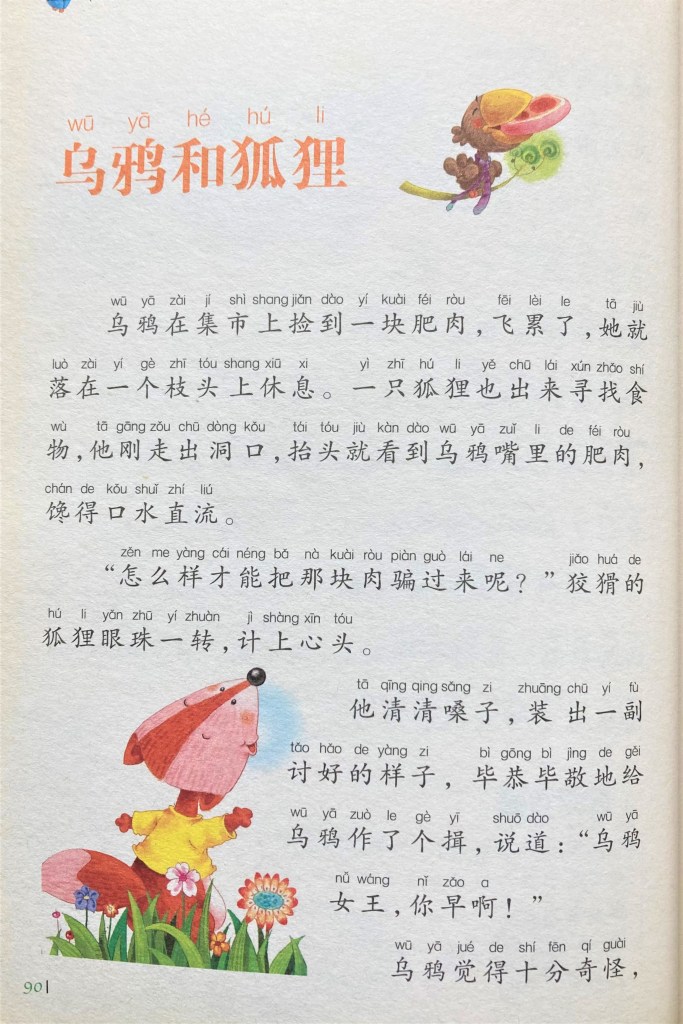
A crow had snatched a goodly piece of cheese out of a window, and flew with it into a high tree, intent to enjoy her prize. A fox spied the dainty morsel and thus planned his approaches.
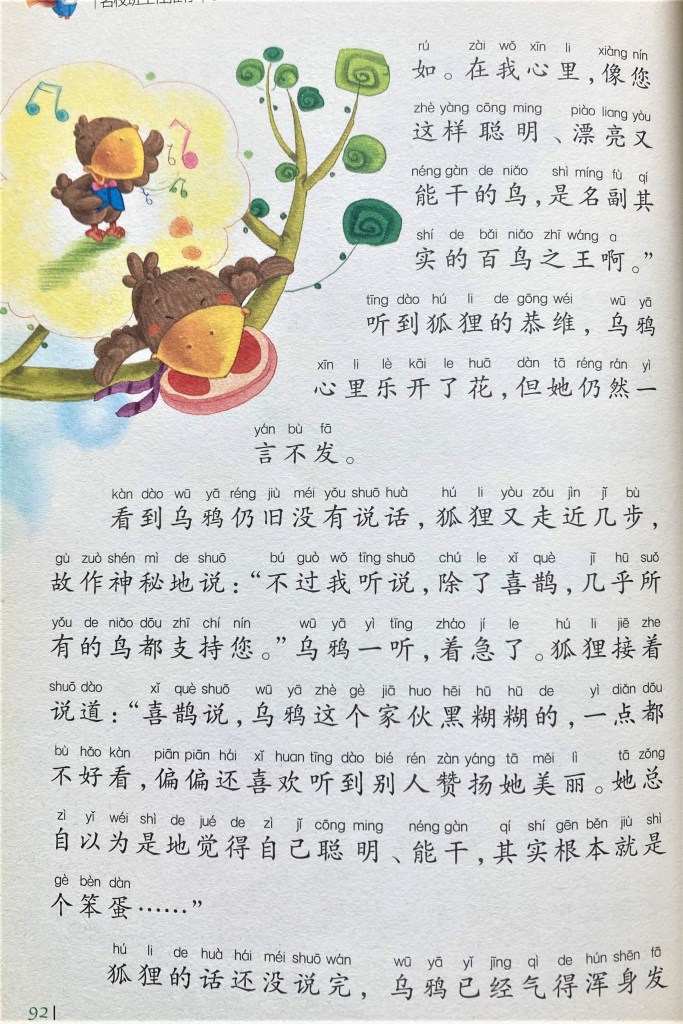
“Oh crow,” said he, “how beautiful are thy wings, how bright thine eye! How graceful thy neck! Thy breast is the breast of an eagle! Thy claws?I beg pardon?thy talons, are a match for all the beasts of the field. Oh! That such a bird should be dumb, and want only a voice!”
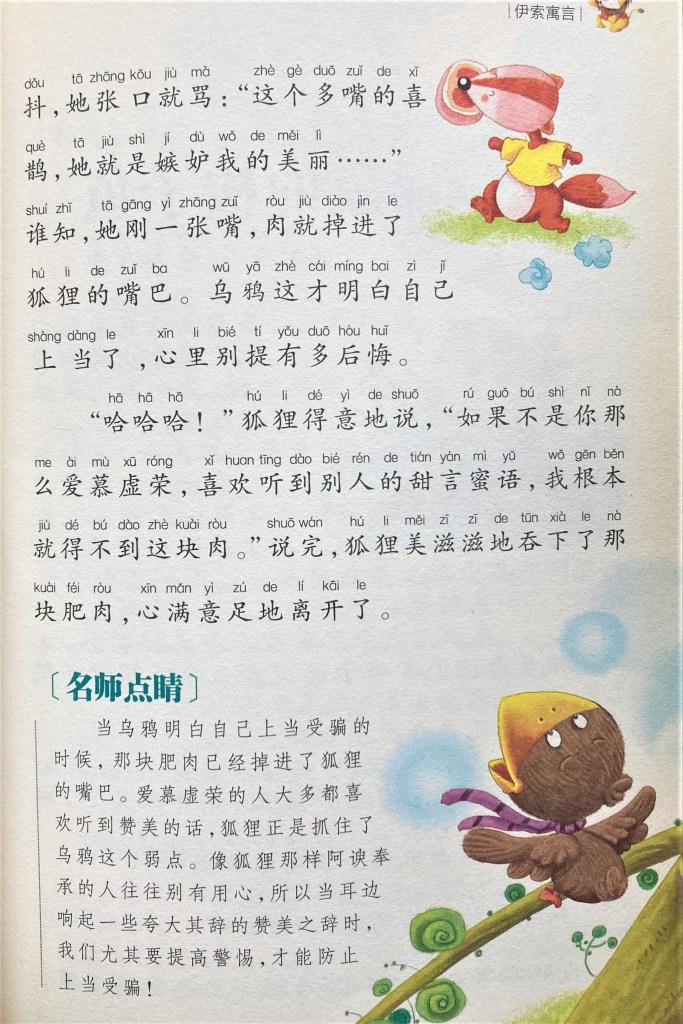
The crow, pleased with the flattery and chuckling to think how she would surprise the fox with her caw, opened her mouth. Down dropped the cheese! The fox snapping up observed, as he walked away, that ?whatever he had remarked of her beauty, he had said nothing yet of her brains.?
Men seldom flatter without some private end in view, and they who listen to such music may expect to have to pay the piper.
One day, Zeus declared a order, he wanted to select the most beautiful bird as a king of birds. All of birds were busied to dress up themselves.
A Jackdaw wished he is the one which is selected.
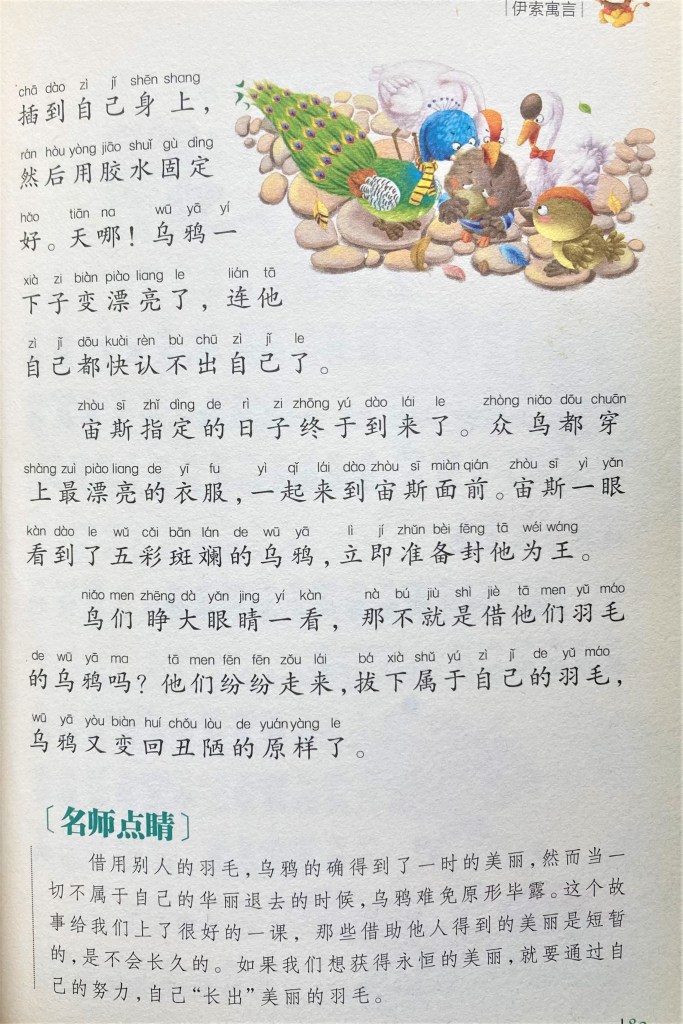
Now the black Jackdaw was not a very handsome bird. Yet he imagined that all he needed to make himself fit for the society of the other birds was a dress like theirs. So he borrowed a feather from the Peacock and stuck them among his own black plumes. And so on, he continued to borrow kinds of feather from all of birds.
Dressed in his borrowed finery he strutted loftily among the birds of his own kind. On that day, all the birds dressed up and walked to Zeus. Zeus saw the colorful Jackdaw at a glance and immediately prepared to make him king. But birds soon saw who he was. Angry at the cheat, they flew at him, plucking away the borrowed feathers and also some of his own.
shi ru po zhu(The operation is like splitting the bamboo. )
In the last years of the three kingdoms period, Si mayan conquered the kingdom of Shu and seized the state power of the kingdom of Wei, and became emperor of Jin dynasty.
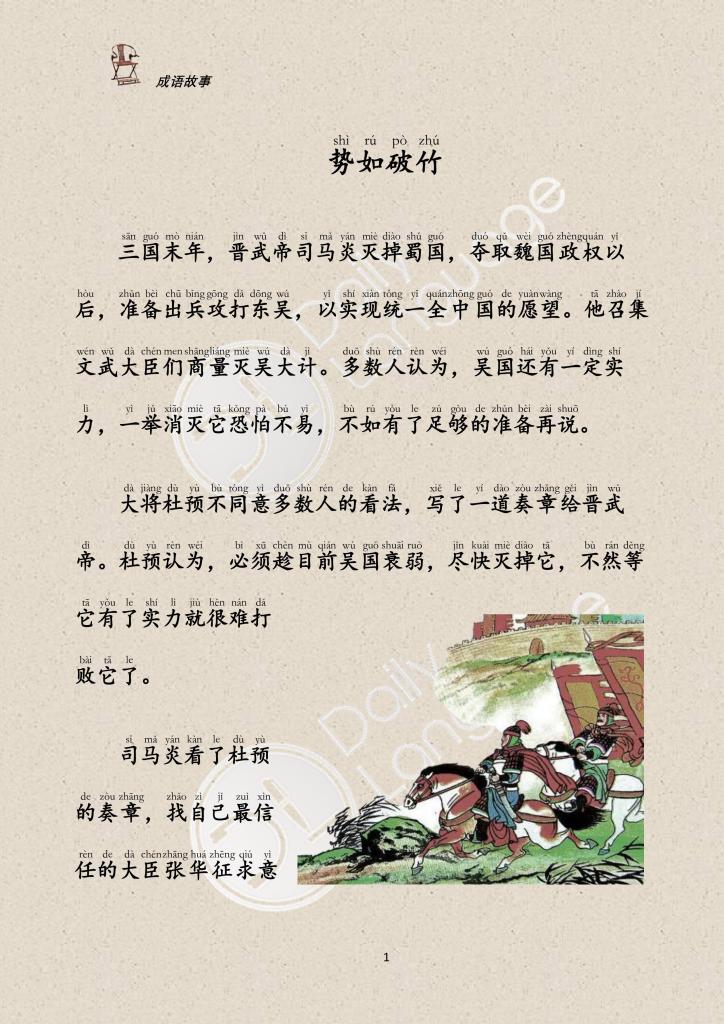
Then he planned to send his troops to attack the kingdom of Wu so as to unify china. His civil and military officials suggested that it would be difficult to try to destroy the kingdom of Wu with one action because the kingdom of Wu was still powerful. So it would be better to wait until fuller preparations were made. However, general Du yu did not agree with them, so he wrote a memorial to the throne. According to Du yu, it would be better to destroy the kingdom of Wu as soon as possible, because it was still weak at that time. It would be more difficult to defeat the kingdom of Wu later if it became stronger.
After reading it, emperor of Jin to send troops to attack the kingdom of Wu as early as possible, so as to avoid future trouble. so emperor of Jin made up his mind, and appointed Du yu the grand general for conquering the south.
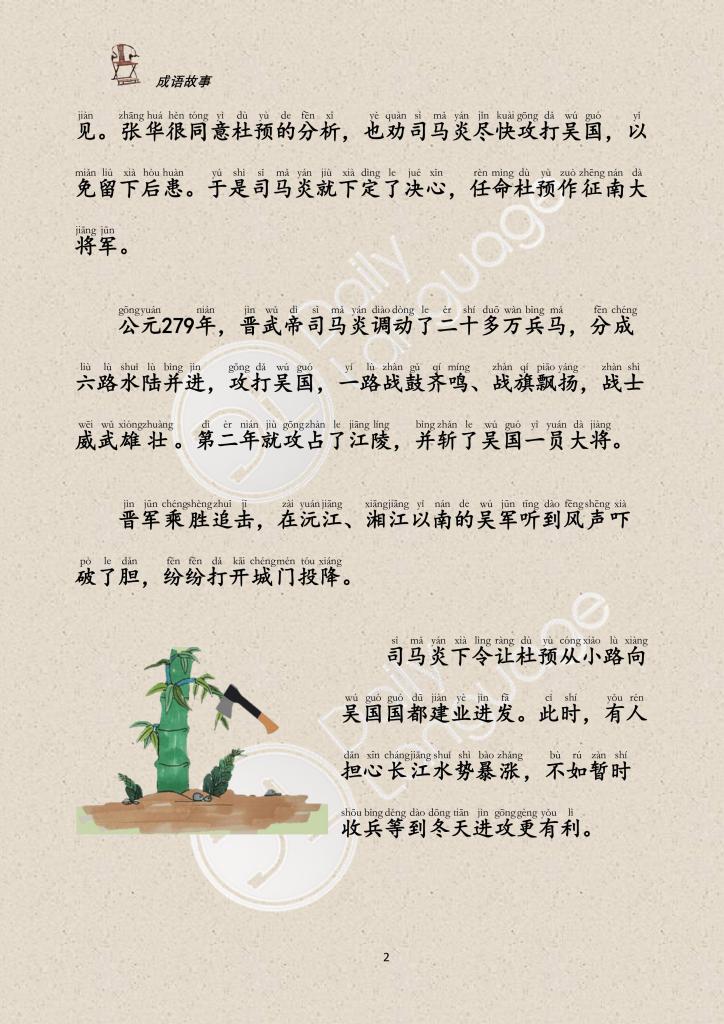
In 279, Si mayan, emperor of Jin dynasty, mustered more than two hundred thousand troops who were divided into six army divisions to proceed by both land and water to attack the kingdom of Wu. Battle drums thundering and the colours fluttering, the soldiers were full of power and grandeur. The next day, Jiangling city was captured, and a general of the kingdom of Wu was killed. And the Jin army pushed on in the flush of victory. Hearing this, the troops of the kingdom of Wu south of the Yuanjiang river and the Xiangjiang river were overwhelmed with fear, and they opened the gates of cities and surrendered one after another. Si mayan ordered Du yu to advance to Jianye, capital city of the kingdom of Wu, by water. Someone feared that the Yangtze river might have a sharp rise and thought it more advantageous to withdraw the troops for the time being and wait until winter came. Du yu resolutely opposed the idea, saying ,” now our army’s morale is high, and our army is winning one victory after another, just like a sharp knife splitting a bamboo. It won’t be too strenuous to conquer the kingdom of Wu with one action. ” Under Du yu’s command , the Jin army charged at the capital city Jianye, occupied it, and thus destroyed the kingdom of Wu.
In this way, emperor of Jin dynasty unified the whole country. This story appears in “the life of Du yu “in the history of the Jin dynasty. Later the set phrase” like splitting a bamboo” is used to refer to irresistible force or victorious advance.
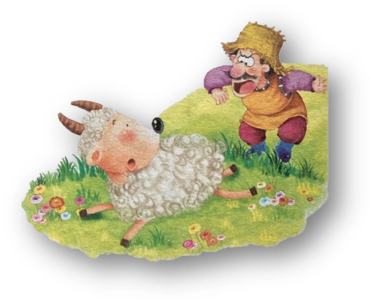
It was a stormy day, and the snow was falling fast, when a goatherd drove his goats, all white with snow, into a desert cave for shelter. There he found that a herd of wild goats, more numerous and larger than his own, had already taken shelter.
Thinking to secure them all, he left his own goats to take care of themselves and threw the branches he had brought for them to the wild goats to browse on. But when the weather cleared up, he found his own goats had perished from hunger, while the wild goats were off and away to the hills and woods.
The goatherd returned a laughing-stock to his neighbors, having failed to gain the wild goats and having lost his own.
They, who neglect their old friends for the sake of new, are rightly served if they lose both.

















 Daily Language