

Meaning of the Idiom
lai zhe bu ju(those who have some or what has been offered/not/refuse.)
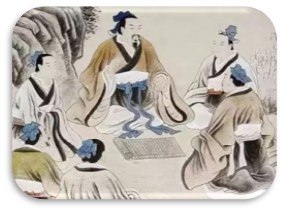
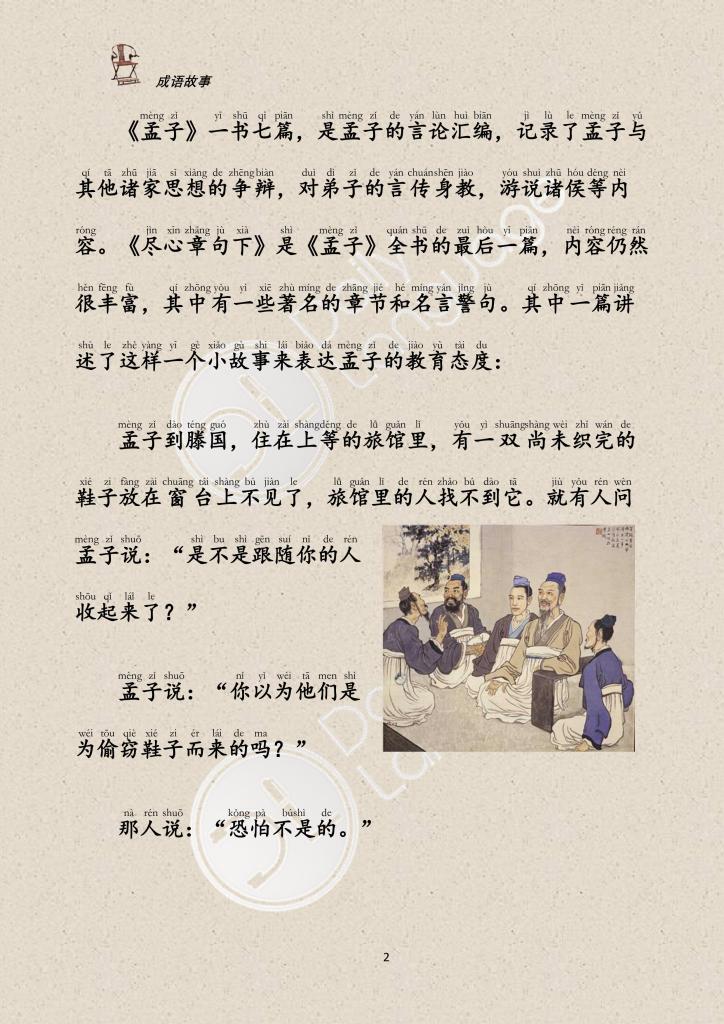
When Mencius arrived in the state of Teng, he stayed in a fine hotel. There was a pair of straw sandals, not yet woven, lying on the windowsill. The people in the hotel looked for them but could not find them.
Mencius was asked, ‘How can the men who followed you hide other people’s things like this?’ Mencius said, ‘Do you think these people came here to steal shoes?’
The man said, “Probably not. “
Mencius said, ‘As a master, I have come to teach; I do not inquire of those who have passed, nor refuse those who have come. If you come with a learning mindset, I’ll take it, that’s all.”
来者不拒
[lái zhě bù jù],意为对于有所求而来的人或送上门来的东西概不拒绝。
出自《孟子·尽心下》。
例句
有些贪官对送礼者是来者不拒 。
凡是有益于我们健康的食品,多多益善,来者不拒。
王老师总是热心帮助同学们解决困难,他从来是来者不拒,有求必应。
Reading The Paragraphs!


Meaning of Words
| 词语 | 华文解释 | 英文解释 |
|---|---|---|
| 受业 | 意思是追随老师接受学业。 例句:教师既包括一般意义上从事的教学、传道、受业、解惑,还指教师为提高自身素质而进行的学习。 | trained |
| 致力 | 意思是把精力投放在某个方面。 例句:他毕生致力于帮助穷人。 | dedicate |
| 争辩 | 意思是辩论;争论。 例句:我们结束这场无聊的争辩吧。 | argue |
| 言传身教 | 意思是一面口头上传授,一面行动上以身作则,指言语行为起模范作用。 例句:家庭教育的关键在于父母的言传身教。 | teach by personal example as well as verbal instrution |
 Daily Language